The Red Panda, also called Ailurus fulgens or the Lesser panda, is one of the most captivating animals in the world. Despite its name, it is not closely related to the giant panda. Instead, it belongs to its own family, Ailuridae, in the order Carnivora under the class Mammalia. This small, elusive creature has a unique evolutionary lineage that makes it an intriguing subject for scientists studying phylogeny and genetic diversity. Found primarily in the Eastern Himalayas and Southwestern China, the Himalayan red panda and Chinese red panda subspecies are adapted to cold, mountainous habitats. Their survival is under threat, making them a critical endangered species that needs attention.
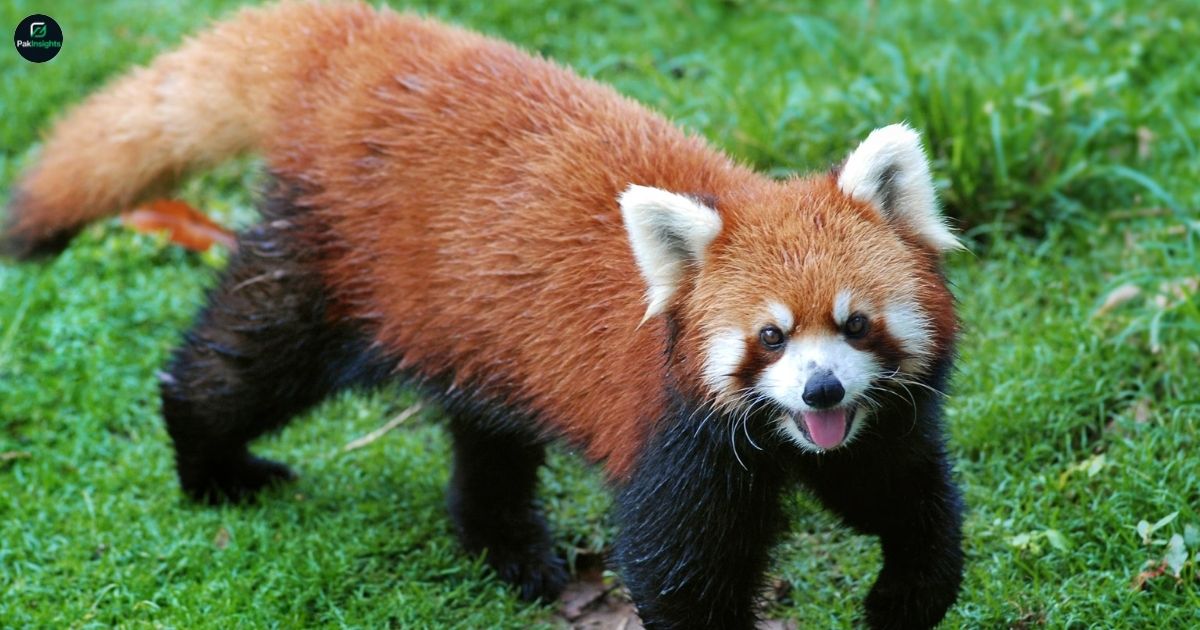
The Red Panda is famous for its reddish-brown fur, black belly and legs, and long ringed tail. Its body length ranges from 51–63.5 cm, with a tail length of 28–48.5 cm, and it weighs between 3.2–15 kg. Equipped with semi-retractile claws and a false thumb, it is highly skilled at climbing. These arboreal adaptations allow it to navigate steep slopes and dense forests with ease. Its skull and dentition reflect a diet primarily of bamboo, but it also eats fruits and insects. Red pandas are truly fascinating creatures, blending characteristics of Procyonidae and Musteloidea, yet retaining a distinct family identity.
Fascinating Facts About Red Pandas
The Red Panda is a master of survival in its mountainous home. Its physical description includes a soft reddish-brown fur that helps camouflage it among tree branches, a ringed tail for balance, and semi-retractile claws for gripping bamboo and trees. Its false thumb function assists in grasping bamboo, a rare adaptation in the animal kingdom. In the wild, it prefers coniferous forests, temperate broadleaf forests, and mixed forests with bamboo cover, water sources, and microhabitats that support its unique lifestyle. Observing a Red Panda in its habitat reveals remarkable arboreal locomotion adaptations that make it a skilled climber and jumper.
The Red Panda has an omnivorous diet, mainly feeding on bamboo shoots and leaves, fruits and blossoms, and occasionally insects or small rodents. Its herbivorous adaptation allows it to digest cellulose efficiently, and seasonal food variation ensures survival during scarce periods. With a digestive system efficiency tailored to fibrous foods, it spends hours foraging for food each day. Its behavior & ecology is equally interesting. Red pandas are solitary, nocturnal and crepuscular, and highly territorial, using scent-marking to communicate. They produce unique communication sounds like growls, barks, and twitters to signal their presence.
Why Red Pandas Are Endangered
Sadly, Red Pandas face numerous threats that have made them an endangered species. Deforestation and habitat fragmentation are the biggest dangers, as human activities like road construction impacts, livestock grazing, and human disturbances shrink their living space. In some areas, they compete with the giant panda for food. Additionally, poaching and illegal trade pose a serious risk. Their small populations are now scattered across Nepal, Bhutan, India, Myanmar, and China, making conservation urgent. Scientists rely on the fossil record to understand their Miocene and Pleistocene lineage, which shows that Red pandas were once more widespread.
Red pandas’ survival also depends on maintaining genetic diversity and healthy populations in the wild. Loss of microhabitats, such as bamboo cover on steep slopes, can disrupt their arboreal locomotion and home range. Studies in phylogeny and genome sequencing reveal how their unique evolutionary lineage is distinct from Procyonidae, even though some features show convergent evolution with giant panda. Protecting these habitats is crucial because it ensures that solitary animals can continue their territorial and nocturnal behaviors without human interference.
Conservation Efforts and How You Can Help
The Red Panda is listed as Endangered on the IUCN Red List and is included in CITES Appendix I, highlighting its need for global protection. Conservation efforts include protected areas across Nepal, India, Bhutan, and China, where community-based conservation projects help reduce human impact. Captive breeding programs have been successful in zoos worldwide, including the USA, improving population numbers and genetic diversity. Organizations also focus on nature conservation projects that restore bamboo forests and maintain safe habitats.
You can help Red Panda conservation in practical ways. Supporting wildlife organizations, donating to community-based conservation programs, and spreading awareness about illegal trade and poaching can make a real difference. Adopting a red panda virtually or funding captive breeding programs allows you to contribute directly. Simple actions like planting bamboo or protecting local wildlife spaces support their habitat & distribution. As Dr. John Smith, a wildlife expert, says, “Every small effort counts when saving an endangered species like the Red Panda.” Together, we can ensure that this cute lesser panda continues to thrive for generations.
Red Panda Quick Facts Table
| Feature | Details |
|---|---|
| Scientific Name | Ailurus fulgens |
| Family | Ailuridae |
| Order | Carnivora |
| Body Length | 51–63.5 cm |
| Tail Length | 28–48.5 cm |
| Weight | 3.2–15 kg |
| Habitat | Eastern Himalayas, Southwestern China |
| Diet | Bamboo shoots and leaves, Fruits and blossoms, omnivorous |
| Behavior | Solitary, Nocturnal and crepuscular, Arboreal locomotion |
| Reproduction | Breeding Jan–Mar, Gestation 131 days, 1–4 cubs |
| Lifespan | Captive: 14 years |
| Conservation Status | IUCN Endangered, CITES Appendix I |
Frequently Asked Questions
Q1: What is a Red Panda?
A Red Panda is a small mammal, also called Ailurus fulgens or Lesser panda, known for its reddish-brown fur, ringed tail, and arboreal adaptations.
Q2: Where do Red Pandas live?
They live in Eastern Himalayas, Southwestern China, and forests of Nepal, Bhutan, India, and Myanmar, preferring areas with bamboo cover.
Q3: What do Red Pandas eat?
Their diet is mainly bamboo shoots and leaves, supplemented with fruits and blossoms, and occasionally insects or small animals.
Q4: Why are Red Pandas endangered?
They face threats like deforestation, habitat fragmentation, poaching, and competition with giant pandas.
Q5: How long do Red Pandas live?
In the wild, they live around 8–10 years, while in captivity they can live up to 14 years.