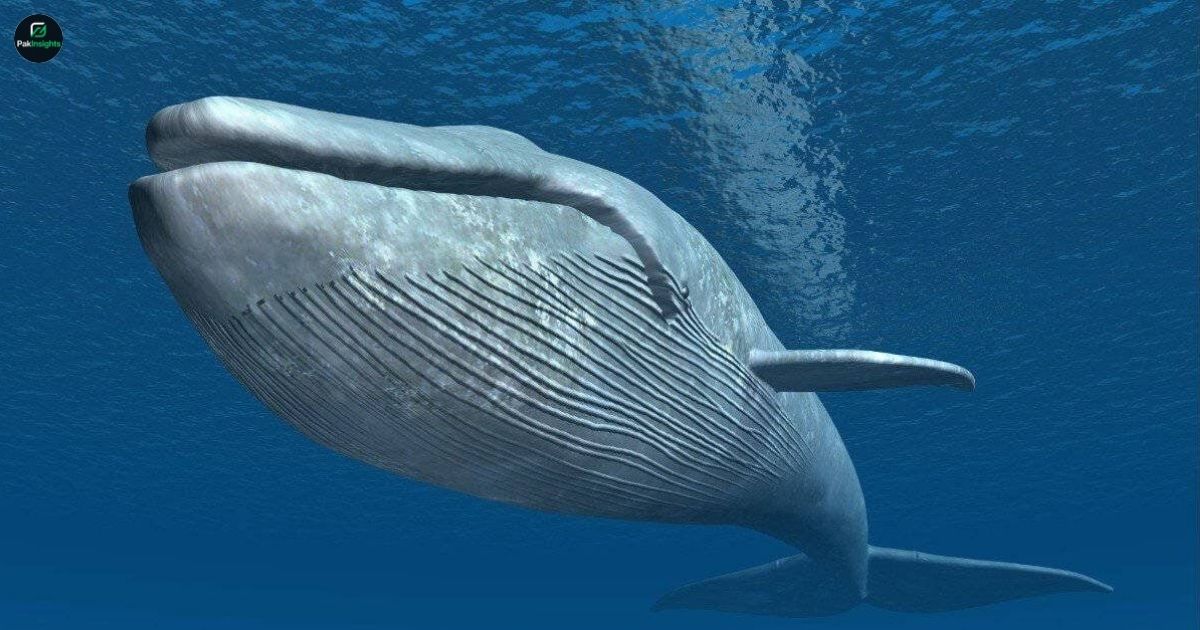
The Blue Whale (Balaenoptera musculus) is the largest animal ever known on Earth. Belonging to the Balaenopteridae family, this marine mammal mesmerizes scientists and ocean lovers alike. With its immense size and gentle behavior, it plays a crucial role in marine ecosystems. Found in oceans worldwide, the Blue Whale remains endangered despite conservation efforts. Its subspecies (B. m. musculus, B. m. intermedia, B. m. brevicauda, B. m. indica) reveal subtle differences in size, migration, and behavior. Known as a Rorqual or Baleen whale, it filters tiny creatures through its baleen plates while gliding silently through the vast seas. Sightings along the coasts of California, Alaska, and New England offer a glimpse into the grandeur of this Cetacean. Protecting these giants is essential for maintaining the balance of ocean life.
Understanding the Blue Whale: Anatomy and Behavior
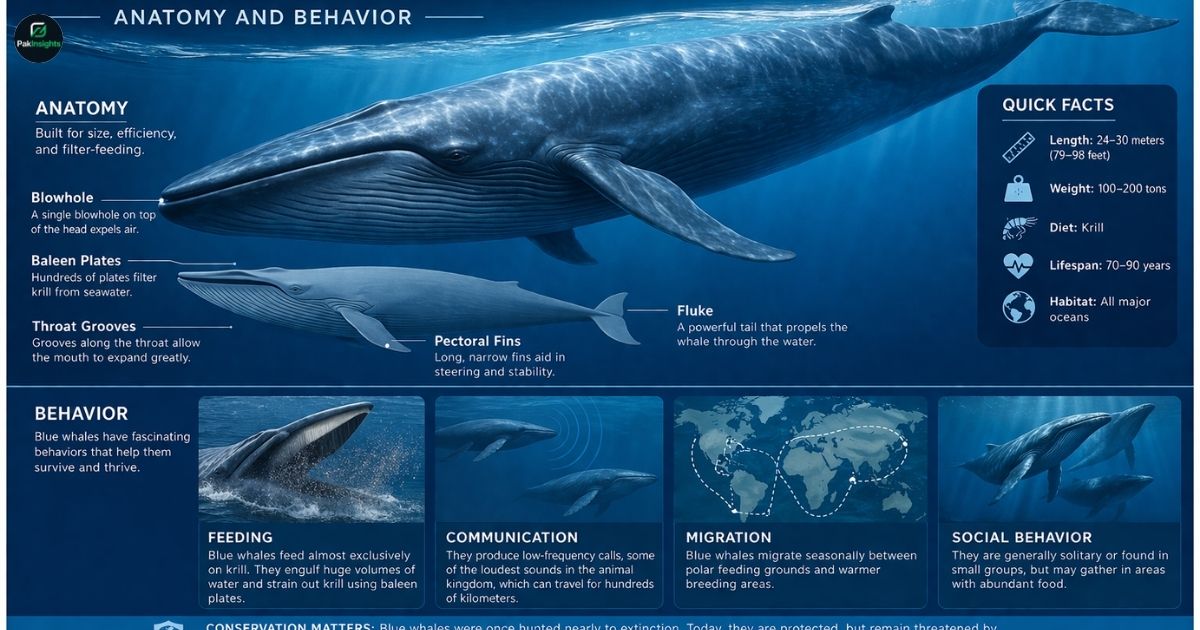
The Blue Whale boasts a U-shaped head, long flippers, a small dorsal fin, and massive flukes. Its body measures 29–33 meters, weighing 190–200 tonnes, making it the largest animal on the planet. Inside, its heart can weigh over 400 kg, while the brain is about 7 kg. Throat grooves expand when feeding, and blowholes release massive spouts visible from afar. Its grayish-blue coloration helps it blend into the deep oceans, while baleen plates (70–400) filter Krill, Sergestid shrimp, and other tiny prey.
Behaviorally, Blue Whales are mostly solitary or found in small groups. Mother–calf bonds are strong, with calves nursing on milk production (220 kg/day). They undertake long migrations, moving from summer feeding grounds in the poles to winter breeding areas. Using vocalizations and low-frequency calls, they communicate across hundreds of kilometers. Feeding involves lunge-feeding techniques, where they engulf vast amounts of water and Krill. They dive to depths of 300–506 m and can reach speeds of 32–48 km/h when threatened, though they usually swim at 2–8 km/h.
| Physical Feature | Details |
|---|---|
| Length | 29–33 meters |
| Weight | 190–200 tonnes |
| Flippers | 3–4 meters |
| Flukes | 7–8 meters |
| Baleen Plates | 70–400 |
| Heart | ~400 kg |
| Brain | ~7 kg |
Threats Facing Blue Whales Today
Blue Whales face serious threats despite protections. Historically, whaling nearly wiped them out until the IWC ban in 1966. Today, they still face ship strikes, ocean noise, pollution, and climate change. Rising ocean temperatures affect prey density selection, forcing whales to travel further for Krill. Entanglement in fishing gear can cause injury or death. Orcas sometimes attack calves, leaving visible rake marks. Human activity continues to disrupt their feeding and communication.
Pollution impacts cetaceans by introducing heavy metals and plastics. Oil spills contaminate feeding grounds, reducing caloric intake & energy requirements. Noise pollution interferes with their low-frequency vocalizations, making navigation and communication harder. Without continued conservation efforts, these Balaenoptera musculus may remain endangered for decades.
Conservation Efforts and How You Can Help
Conservation programs protect Blue Whales globally and in the USA. Agencies like NOAA monitor populations, regulate whale-watching, and enforce marine protected areas. Recovery efforts have helped some populations in the Eastern Tropical Pacific and North Atlantic. Scientific research on genome sequencing, phylogeny, and hybridization aids understanding of their evolution and genetic diversity.
Individuals can make a difference. Supporting NGOs, avoiding single-use plastics, and choosing eco-friendly tours help reduce human impact. Spreading awareness about the endangered Balaenopteridae family species can inspire others to protect these giants. Every effort matters in ensuring Blue Whales continue to glide through our oceans for generations.
| Conservation Action | Description |
|---|---|
| Marine Protected Areas | Safe feeding & breeding zones |
| Responsible Whale Watching | Limits disturbance & stress |
| Pollution Control | Reduce plastics & chemicals |
| Public Awareness | Educate communities & tourists |
Frequently Asked Questions
Q1: What is a Blue Whale?
The Blue Whale (Balaenoptera musculus) is the largest marine mammal, reaching up to 33 meters and weighing 200 tonnes.
Q2: Are Blue Whales endangered?
Yes, they are classified as endangered due to historical whaling and ongoing human threats.
Q3: What do Blue Whales eat?
They feed mainly on Krill, Sergestid shrimp, and other tiny baleen whale prey using filter feeding.
Q4: How long do Blue Whales live?
Blue Whales can live up to 80–90 years in the wild.
Q5: Where can Blue Whales be found?
They are found in global oceans, including the North Atlantic, Pacific, Southern Ocean, and Indian Ocean.