
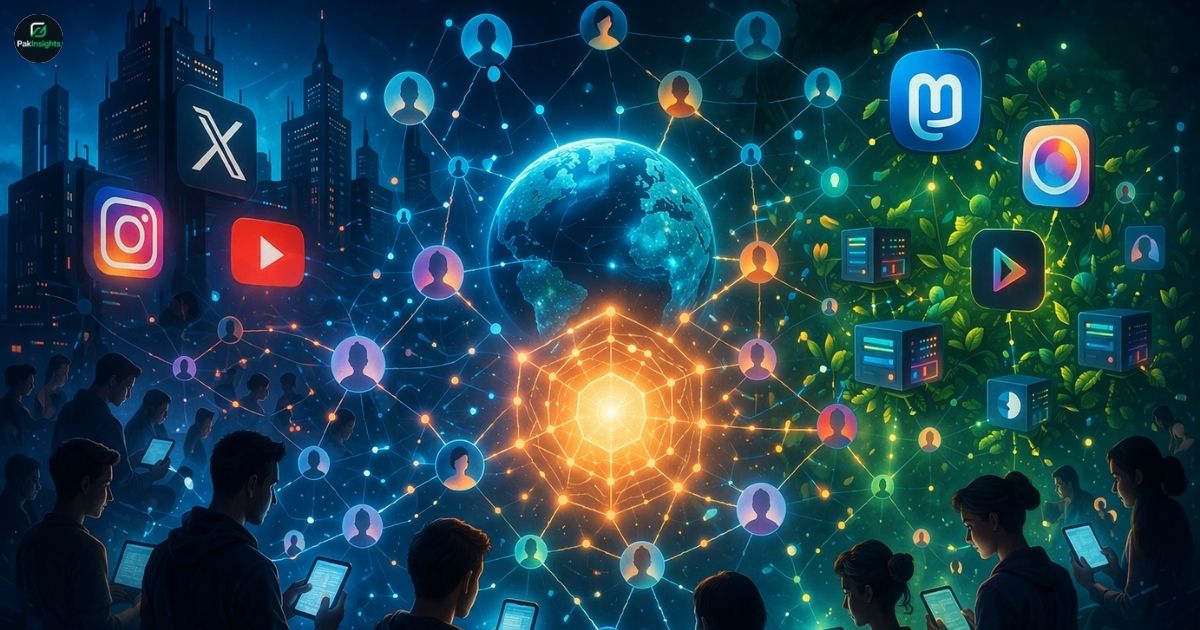
In recent years, decentralized social media has become a hot topic in the United States. Many users are frustrated with Big Tech platforms like Twitter/X, Instagram, and YouTube because of privacy issues, content control, and biased algorithms. People are now seeking social media alternatives that give them user data control and freedom to express themselves. The rise of online migration from traditional platforms is partly fueled by debates around free speech online and the backlash against cancel culture. Even the controversial actions of Elon Musk and his support for far-right political ideologies on Twitter/X have pushed some Americans to explore new digital spaces.
Experts like Robert Gehl, Ontario Research Chair of Digital Governance, note that the shift toward decentralized networks is not just a trend. It reflects a deeper desire for autonomy in the online world. Users want systems where content moderation is transparent, where platform governance is fair, and where a single company does not control everything. This is where decentralized social media and federated social media systems like the Fediverse come into play.
Understanding Decentralized Social Networks and How They Work
Decentralized social media works very differently from centralized social media. Instead of one company controlling all data and servers, multiple network servers communicate using a shared protocol. The ActivityPub protocol, developed by the World Wide Web Consortium, allows platforms to connect across the Fediverse. For example, someone on Mastodon can interact with a user on Pixelfed or PeerTube seamlessly. It works a lot like email; your friend may use Gmail, another uses Outlook, and you use ProtonMail, yet everyone can communicate freely.
These federated social media systems give users more control over their accounts and data. Platforms like Mastodon (microblogging site), Pixelfed (image-sharing networks), and PeerTube (video-sharing platforms) show how decentralized networks operate. Unlike centralized systems, these platforms allow each server to set its rules. Users can join servers that match their interests or values, creating smaller communities that connect across the global network. This model encourages online migration from mainstream social media while offering more privacy and transparency.
Advantages and Challenges of Moving Away from Big Tech
Switching to decentralized social media offers many benefits. Users gain user data control, freedom from targeted ads, and protection against algorithmic manipulation. Content moderation is more community-driven, allowing people to avoid the heavy-handed restrictions often seen on Twitter/X, Instagram, or YouTube. Platforms like Bluesky, launched by Jack Dorsey, also attempt to offer freedom while still being easy to use. Experts argue that digital governance on these platforms can be more democratic than Big Tech platforms, giving communities a voice in decisions that affect them.
However, challenges remain. Adoption is slower because most people are familiar with centralized social media. Running a server can be complex, and federated systems often require users to understand the technical side of ActivityPub. Discovery is harder; without a centralized feed, new users may struggle to find content. Despite these hurdles, case studies show communities thriving on Mastodon and Pixelfed, proving that decentralized networks can survive alongside mainstream platforms.
| Platform | Type | Example Use Case | Centralized? |
|---|---|---|---|
| Mastodon | Microblogging | Sharing news & updates | No |
| Pixelfed | Image-sharing | Photography communities | No |
| PeerTube | Video-sharing | Independent video hosting | No |
| Bluesky | Microblogging | General social interaction | Partially |
Future Outlook: Will Decentralized Platforms Overtake Mainstream Social Media?
The future of decentralized social media in the USA looks promising but uncertain. Growth is steady as more users worry about privacy and cancel culture. Experts like Robert Gehl suggest that if federated social media systems continue improving usability and discovery, they could attract a larger audience from centralized systems like Twitter/X and Instagram. Investors are also exploring these platforms, seeing opportunities in social media alternatives that emphasize freedom and digital governance.
However, mainstream adoption will require overcoming technical barriers and achieving network effects. Platforms must make joining the Fediverse easy for non-technical users and ensure content moderation balances free expression with safety. If they succeed, decentralized networks could reshape how Americans engage online, offering a more transparent, user-controlled, and diverse internet. As Mastodon, Pixelfed, PeerTube, and Bluesky evolve, the era of Big Tech platforms’ dominance might face a real challenge.
Frequently Asked Questions
Q1: What is decentralized social media?
Decentralized social media is a network where multiple servers connect, giving users more control over their data and freedom from Big Tech platforms.
Q2: How is it different from traditional social media?
Unlike centralized social media, decentralized platforms like Mastodon and Pixelfed let communities set their own rules and manage content moderation independently.
Q3: What are the benefits of using decentralized platforms?
Users gain privacy, user data control, and less exposure to algorithm-driven feeds or cancel culture.
Q4: What are the main challenges?
Decentralized platforms often have a learning curve, lower adoption, and require understanding the ActivityPub protocol for server interactions.
Q5: Can decentralized social media replace Big Tech platforms?
It has potential, but mass adoption depends on improving usability, discovery, and achieving enough network growth to compete with Twitter/X and Instagram.