
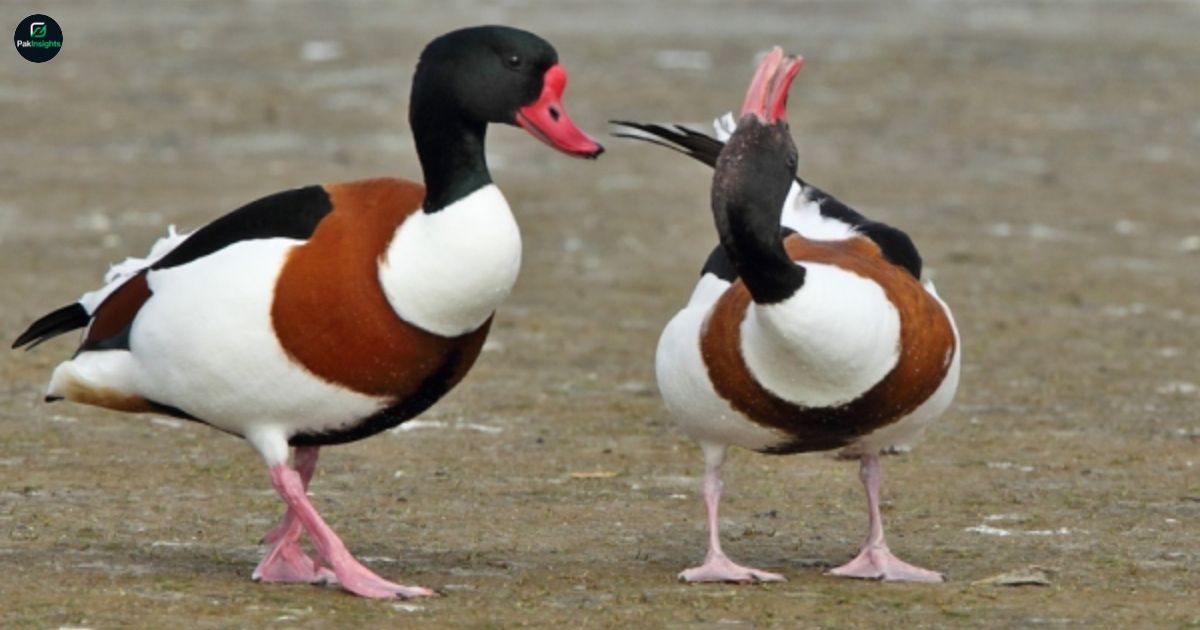
The Common Shelduck is a striking waterfowl species that captures the attention of birdwatchers and nature lovers alike. Belonging to the shelduck genus, its presence is most notable in the Eurosiberian region, yet occasional human sightings (North America, Caribbean, South America) make it a fascinating bird worldwide. Known scientifically as Tadorna tadorna, this bird has been studied for centuries, with the binomial name first described by Carl Linnaeus in 1758. Its evolution is tied to the fossil record, with ancestors possibly dating back to the Pliocene and Pleistocene, making it a remarkable example of avian adaptation over millions of years.
These birds are medium-sized, standing out with a dark green head and neck, pink feet, and chestnut patches on their wings. Their primary remiges are black, and secondary feathers show green in flight, while underwing coloration is mostly white. Their calls are unmistakable, marked by a loud honk call that resonates across lakes and rivers. The Common Shelduck is not only visually striking but also ecologically significant, playing a role in coastal and estuarine ecosystems.
Overview and Identification of the Common Shelduck
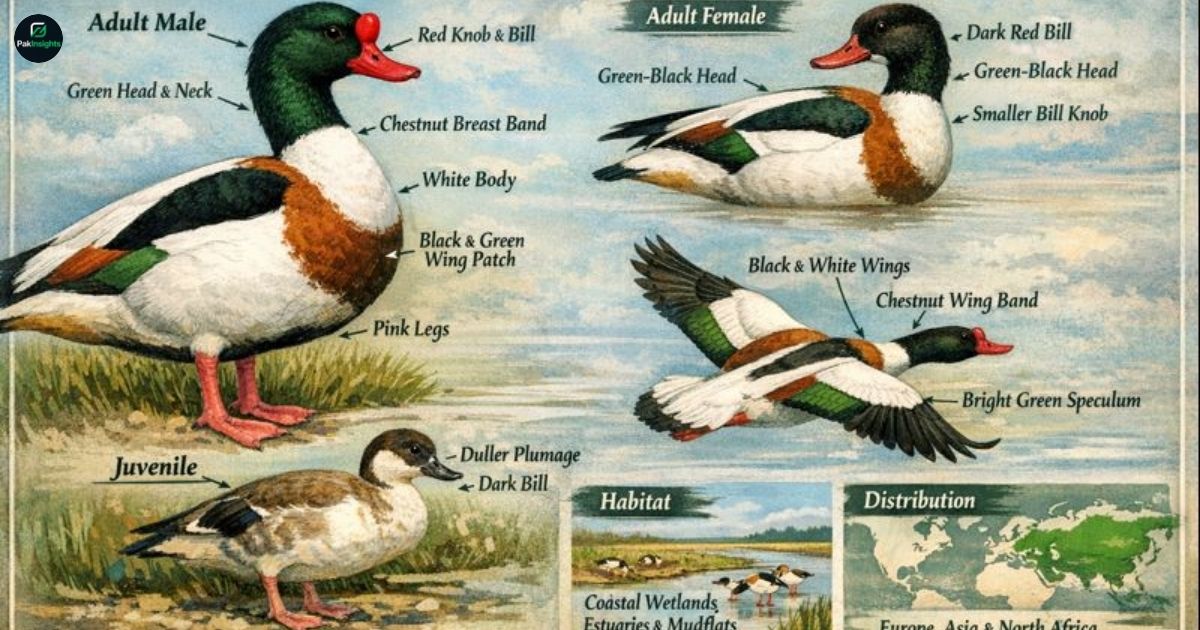
Identifying a Common Shelduck is easy once you know what to look for. The adult female shelduck is smaller and less vivid, while the breeding male shelduck is brightly colored with a pronounced forehead knob during mating season. Juvenile plumage is duller but already hints at the adult’s wing pattern. Observing these differences helps birdwatchers distinguish males, females, and juvenile ducklings in the wild.
The morphology of the shelduck includes a short neck, a rounded body, and a long, pinkish bill. They often gather in moulting flocks in places like the Wadden Sea, where thousands can be seen together. Their legs and pink feet allow them to walk easily in shallow waters, while their strong wings support long flights across regions. This species belongs to the Anseriformes order and Anatidae family, emphasizing its close relation to other ducks and geese. A simple table can help summarize their key physical traits:
| Feature | Male Shelduck | Female Shelduck | Bright pink with a knob |
|---|---|---|---|
| Head | Dark green | Duller green | Greyish |
| Bill | Bright pink with knob | Pink | Small pink |
| Body | White with chestnut patches | White with faint chestnut | Mostly white with grey |
| Wing | Primary black, secondary green | Same as male | Developing adult pattern |
| Call | Loud honk | Loud honk | Soft peeps |
Habitat, Distribution, and Migration Patterns
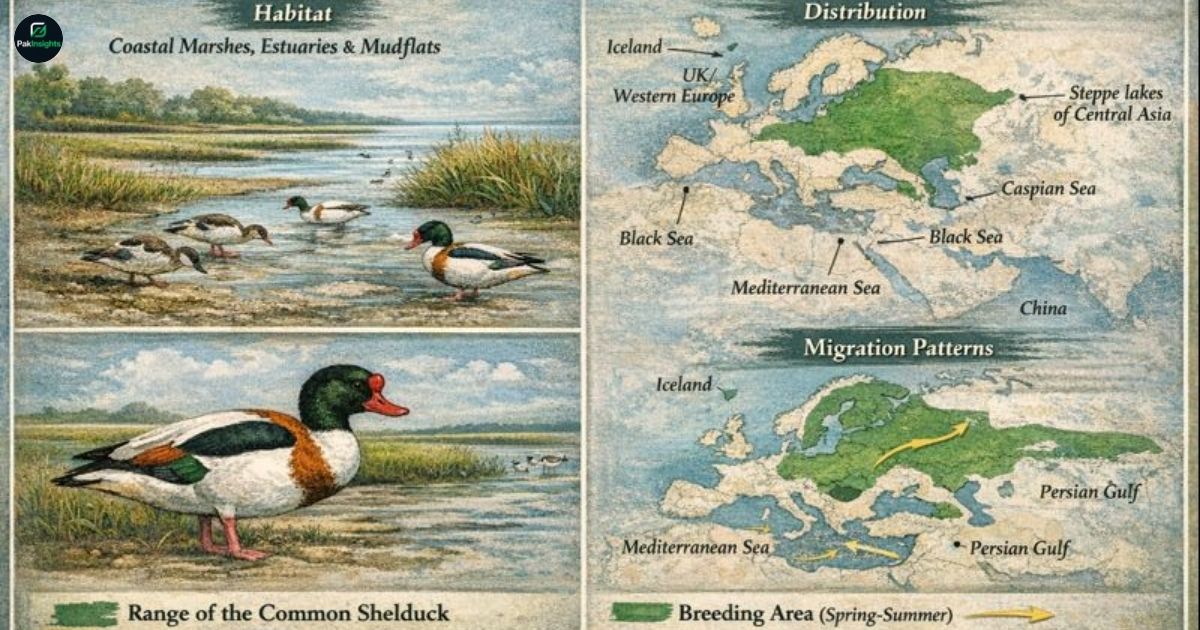
The Common Shelduck prefers coastal habitat, salt marshes, and estuaries, often nesting in rabbit burrows, tree holes, and haystacks. They breed in temperate breeding areas of Europe and Asia, and migrate to subtropical wintering grounds, sometimes reaching the Maghreb in northern Africa. These birds are highly adaptable, moving across lakes and rivers and using tidal mudflats for feeding.
Migration is a critical part of their life. Large moulting flocks can number in the tens of thousands, making their migration patterns impressive. While mostly resident in Western Europe, they sometimes appear in human sightings (North America, Caribbean, South America). Seasonal movements also ensure that chicks, left in a crèche of ducklings, stay safe from predators while adults feed or fly. This species’ adaptability makes it one of the most resilient migratory waterbirds in its range.
Behavior, Diet, and Breeding Habits
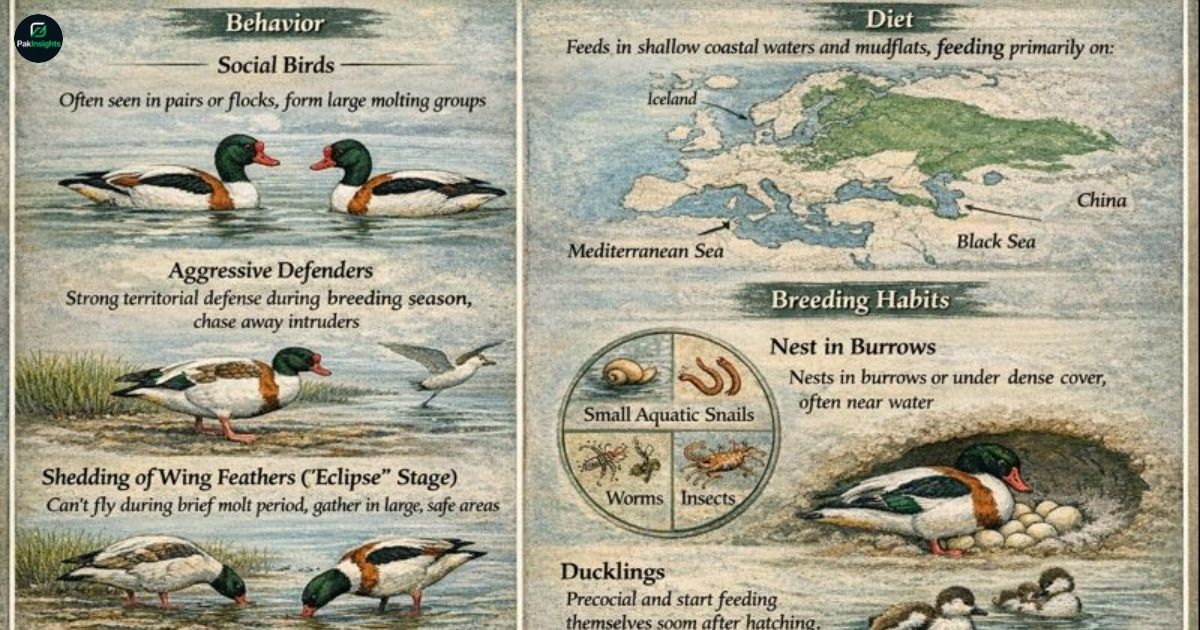
The Common Shelduck has fascinating behaviors. They often form large groups during moulting, leaving a crèche of ducklings protected by one or two adults. Their predator avoidance behavior is clever: adults act as decoys, distracting threats while young ones hide. This social system ensures high survival rates among juvenile ducklings.
Their diet is varied, consisting of mollusks, small insects, and aquatic plants. Feeding mostly in estuaries and shallow waters, they use their bills to sift through sediment. Breeding usually occurs in temperate breeding zones, and nests are often in rabbit burrows, which provide safety from predators. Eggs hatch in about four weeks, and the young quickly learn to swim and feed. This combination of clever social behavior and adaptive diet keeps the Common Shelduck thriving.
Conservation Status and Human Interaction
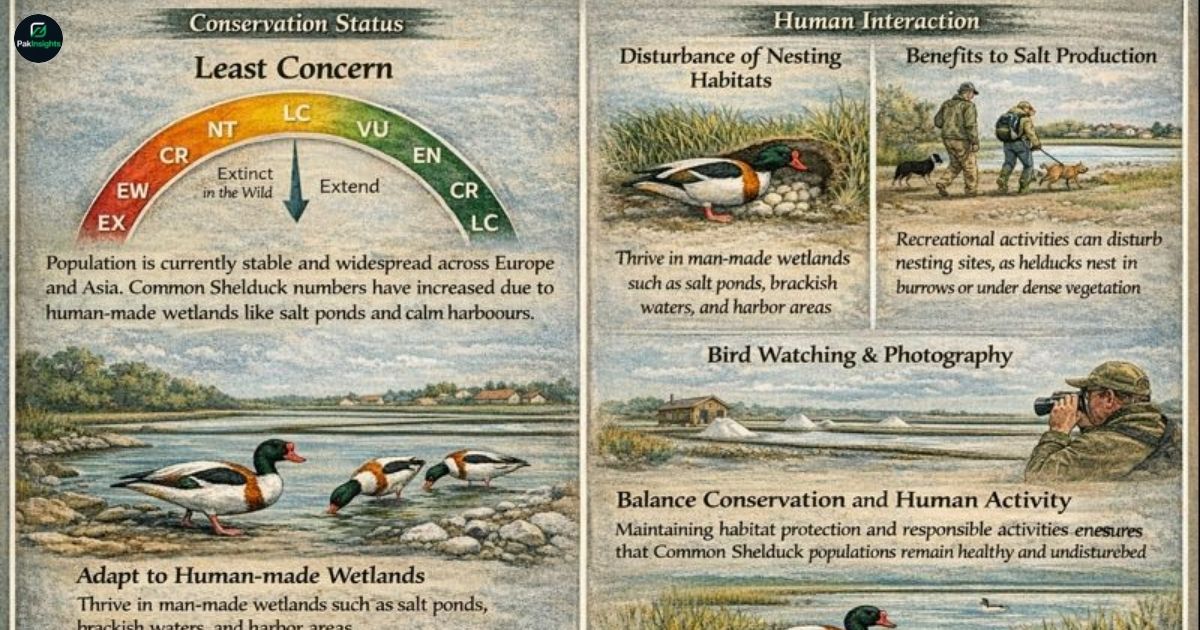
Despite its wide distribution, the Common Shelduck faces threats from habitat loss and coastal development. Its current conservation status is listed as Least Concern, but monitoring continues through organizations like AEWA (Agreement on the Conservation of African-Eurasian Migratory Waterbirds). Human activity, including eco-tourism and wetland management, can both help and harm this species.
Encouragingly, protection measures have ensured stable populations in Europe, and occasional human sightings (North America, Caribbean, South America) raise interest among birdwatchers. Coastal restoration projects, protection of salt marshes, and awareness campaigns are key strategies for sustaining this iconic migratory waterbird. Observing their behavior, from moulting flocks to crèches of ducklings, provides insight into their resilience and importance in wetland ecosystems.
Frequently Asked Questions
Q1: What is a Common Shelduck?
The Common Shelduck is a medium-sized waterfowl species from the shelduck genus, known for its striking colors and loud honk.
Q2: Where does the Common Shelduck live?
It breeds in the Eurosiberian region and migrates to subtropical wintering areas, often seen in salt marshes and estuaries.
Q3: How can I identify a male and female shelduck?
The breeding male shelduck has a bright, dark green head and neck and a forehead knob, while the adult female shelduck is smaller and paler.
Q4: What does a Common Shelduck eat?
They feed on mollusks, small insects, and aquatic plants in lakes and rivers or subtropical estuaries.
Q5: How does the Common Shelduck protect its young?
Adults use predator avoidance behavior, acting as decoys while leaving a crèche of ducklings safe.
Meta Description
Discover the Common Shelduck: habitat, behavior, diet, migration, and conservation of this striking waterfowl species.