
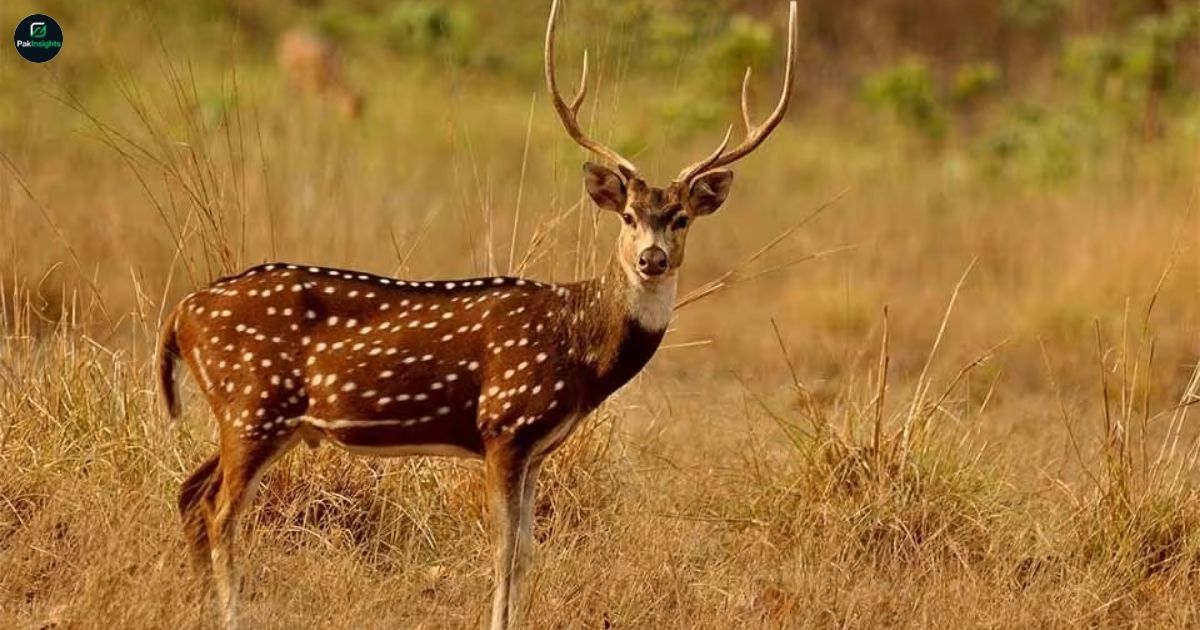
The Chital Axis Deer, also known as the Indian spotted deer, is one of the most elegant and recognizable deer species in the world. Native to South Asia, these deer have fascinated wildlife enthusiasts for centuries with their golden to rufous coat, dotted with white spots and marked by a dark dorsal stripe. They belong to the Cervidae family, under the Genus Axis, and are scientifically classified as the speciesAxis axis. The Chital first appeared in the Middle Pleistocene to Present, according to fossil studies, making them a species with a long evolutionary history. Today, they are not only found in their native lands but have also been introduced in countries like the USA, Australia, and parts of South America.
These deer are admired for their antlers, which are usually three-pronged and grow anew every year. Male Chital are larger than females due to sexual dimorphism, and their brow tine and velvet antlers give them a majestic look during the mating season. Their unique preorbital glands and pedal glands are used for communication and marking territory, while their hooves and tail help them navigate dense forests and open grasslands. Known for their graceful movements and alertness, the Chital Axis Deer has become a symbol of both beauty and adaptability in the animal kingdom.
Overview and Key Characteristics of Chital
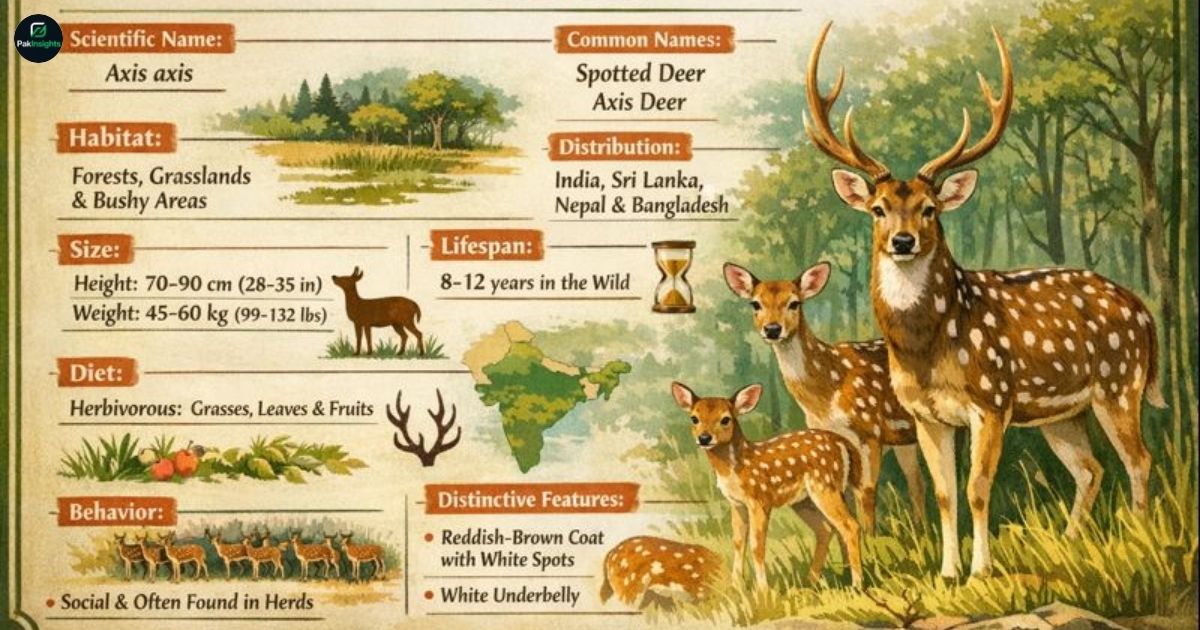
The Chital, or Axis deer, is a medium-sized deer with males reaching up to 90–100 cm at the shoulder, while females are slightly smaller. Their golden to rufous coat is patterned with white spots, and a prominent dark dorsal stripe runs along the back. Antlers are present only in males, and the brow tine separates each prong, giving the deer its classic silhouette. These deer belong to the Mammalia class and Artiodactyla order, sharing lineage with Hyelaphus, Rucervus, Barasingha, and Schomburgk’s deer. Fossil records suggest that Chital Axis Deer diverged in the Early Pliocene, highlighting their ancient origins.
Their sensory adaptations are remarkable. Preorbital glands near the eyes and pedal glands in the hind legs allow males to mark territories and communicate dominance. The deer uses its specialized hooves for speed and agility and signals danger with its tail during predator encounters. In captivity, their lifespan can reach up to 22 years, while in the wild, it typically ranges from five to ten years. This adaptability, combined with their striking physical traits, makes the Chital Axis Deer a unique and resilient species among spotted deer.
Habitat and Geographic Distribution
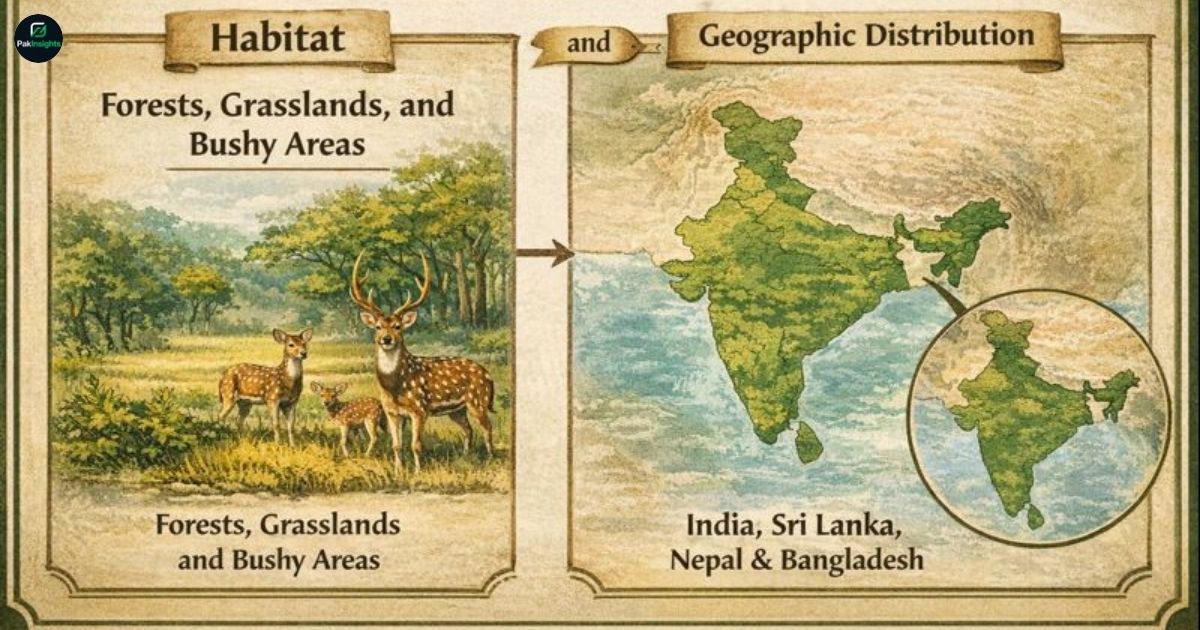
The Chital Axis Deer is native to India, Nepal, Bhutan, Bangladesh, and Sri Lanka, thriving in semi-evergreen forests, grasslands, and lowlands below 1,100 m elevation. They are most commonly found in wildlife sanctuaries such as Keoladeo, Ranthambore, Kanha, Jim Corbett, and Tadoba Andhari National Parks, as well as the Terai region and Sundarbans mangroves. These areas provide abundant grasses, shoots, and water sources, which are crucial for their survival.
Introduced populations have successfully adapted to non-native regions, including Hawaii and Texas in the USA, Australia, and parts of South America like Argentina, Brazil, Chile, and Uruguay. In these areas, deer management and population control are essential to prevent ecological damage. The table below highlights key regions of native and introduced populations:
| Region | Status | Habitat Type | Population Notes |
|---|---|---|---|
| India, Nepal, Bhutan, Bangladesh, Sri Lanka | Native | Forests & Grasslands | Stable in protected areas |
| Hawaii, Texas (USA) | Introduced | Open fields & Parks | Rapid growth; managed hunting |
| Australia | Introduced | Woodlands | Adapted to environment |
| Argentina, Brazil, Chile, Uruguay | Introduced | Forested & grasslands | Small, scattered populations |
Behavior, Diet, and Social Structure
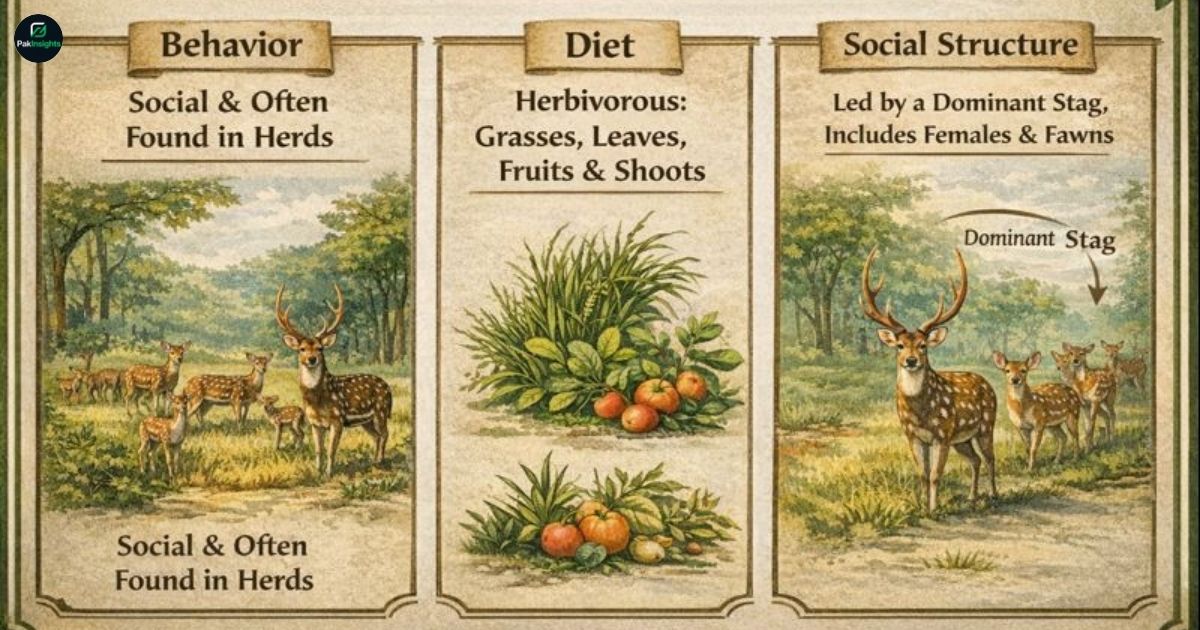
The Chital Axis Deer is diurnal, meaning it is active during the day, and shows strong herding behavior. Herds are often matriarchal, with females leading the group while males patrol or spar during the rutting season. Herd sizes vary, from small groups of five to large aggregations of 100 in India, while in the USA, herds are usually smaller due to population management programs. These deer have complex social structures and communicate using alarm calls, vocalizations, and scent markings via territorial behavior.
Their diet is highly adaptable. Primarily grazers, Chital Axis Deer feed on grasses and shoots, but they also browse herbs, shrubs, fruits, and forbs. They exhibit osteophagia, gnawing on bones, and shed antlers for essential minerals like calcium and phosphorus. Water is crucial, so they frequently visit mineral licks and water sources. These deer also interact with other wildlife, such as langurs, which act as lookouts, warning the herd of predators like Indian wolves, tigers, leopards, dhole, pythons, and crocodiles. Their foraging patterns change with seasons and food availability, showing remarkable intelligence and adaptability.
Conservation Status and Threats
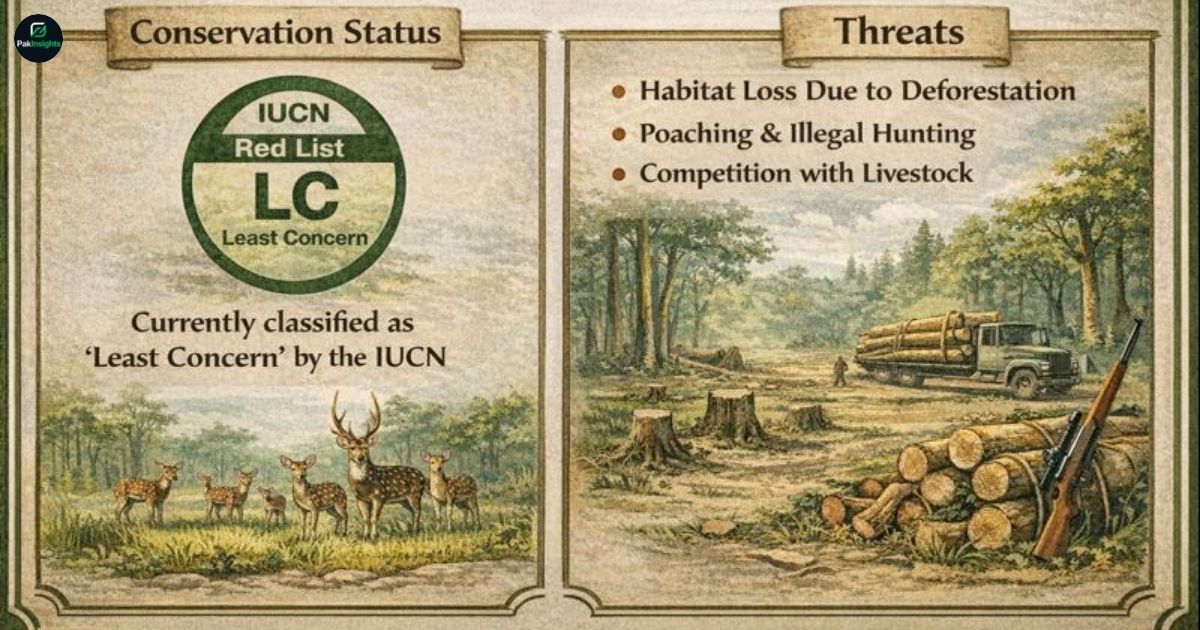
The IUCN Red List classifies the Chital Axis Deer as Least Concern because large populations thrive across many protected areas. Legal protections under the Wildlife Protection Act (India) and various conservation reserves ensure stability in native regions. However, threats like hunting pressure, habitat loss, and competition with livestock still exist. In the USA, wildlife managers control introduced populations through regulated hunting and venison programs to maintain ecological balance.
Despite their adaptability, conservationists emphasize deer management and population control in non-native areas. In some regions, introduced/invasive species create challenges for local flora and fauna. Educating communities, monitoring breeding season activity, and understanding the estrus cycles, courtship and rutting behavior, and mother-fawn bonds are vital for sustainable management. Studies in India and the USA show that Chital Axis Deer not only survive but thrive when humans maintain ethical and informed conservation practices.
Frequently Asked Questions
What is a Chital Axis Deer?
The Chital Axis Deer is a medium-sized spotted deer native to South Asia, known for its white spots, graceful movement, and three-pronged antlers.
Where do Chital Axis Deer live?
They naturally live in India, Nepal, Bhutan, Bangladesh, and Sri Lanka, and have introduced populations in the USA, Australia, and South America.
Why are Chital also called Axis deer?
The name comes from their scientific classification, Genus Axis and Species Axis axis, which distinguishes them from other deer species.
What do Chital Axis Deer eat?
They are both grazers and browsers, feeding on grasses, shoots, fruits, and shrubs, and they often visit mineral licks for nutrients.
Are Chital Axis Deer endangered?
No, they are listed as Least Concern on the IUCN Red List, though some regions manage populations due to habitat impact.
Meta Description
Discover Chital, the elegant Axis deer known for white spots, unique behavior, habitat range, and conservation status worldwide.