
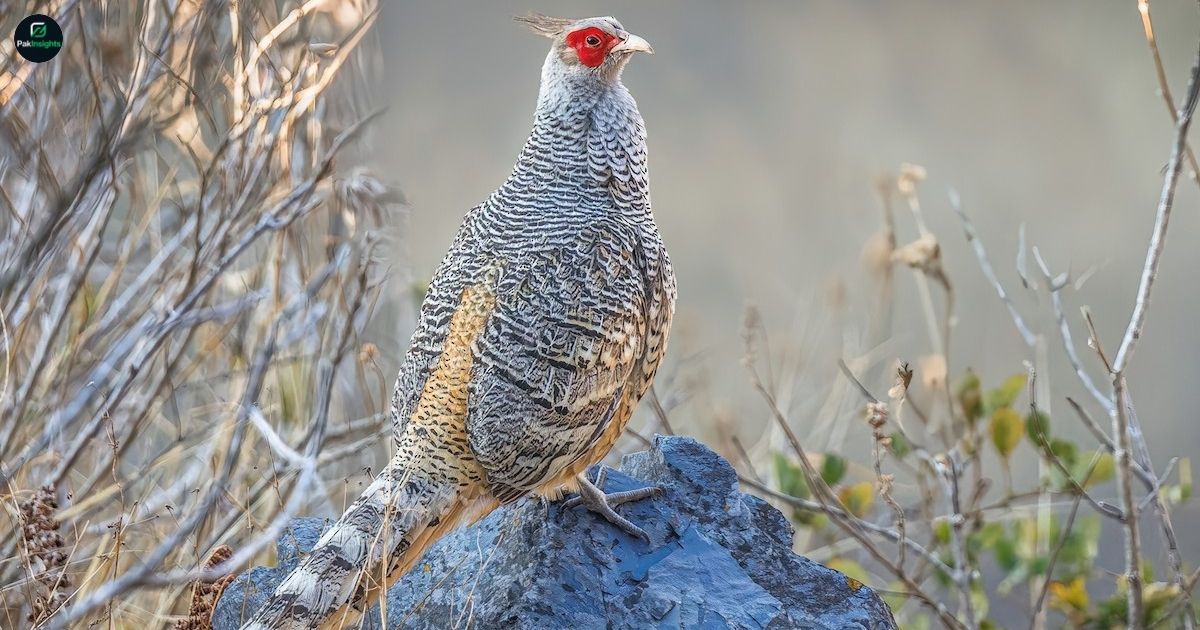
The Cheer Pheasant is one of those birds you don’t forget once you learn about it. Unlike flashy birds that rely on bright colors, this species attracts attention through rarity, resilience, and its quiet survival story in the mountains. Known scientifically as Catreus wallichii, the Cheer Pheasant belongs to the Phasianidae family and stands apart from almost every other pheasant species on Earth. For readers in the United States who love wildlife, ecology, and conservation stories, this bird offers a powerful example of how fragile mountain ecosystems can be.
Often called Wallich’s pheasant or the Chir pheasant, this bird lives far from crowded forests and city noise. It survives in remote mountain landscapes, where human access is limited, and nature still sets the rules. Because it is classified as a Vulnerable species, the Cheer Pheasant appears on both the IUCN Red List and CITES Appendix I, making it one of the most protected mountain birds in the world. Its story matters because protecting this bird also protects entire mountain habitats.
Overview and Distinctive Features of Cheer Pheasants
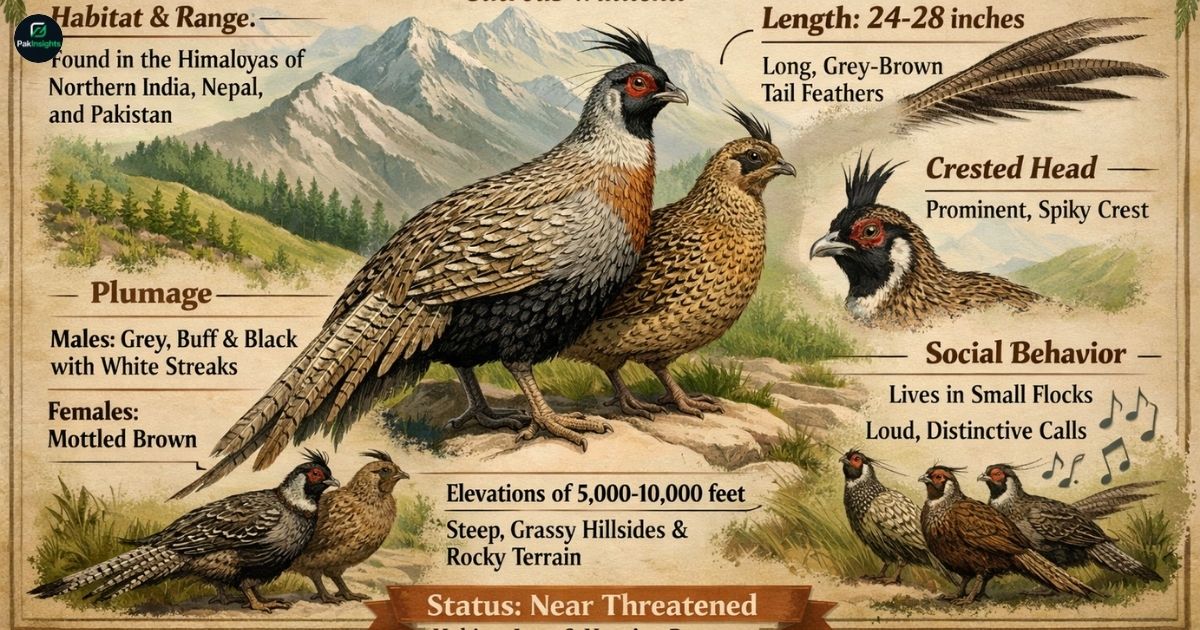
At first glance, the Cheer Pheasant may seem modest compared to colorful tropical birds. Look closer, and its beauty becomes clear. The species shows Buffy gray plumage with earthy brown tones that blend perfectly into rocky slopes. This natural plumage coloration works like camouflage, helping the bird avoid predators. One striking feature is its Long tail feathers, which give the bird an elegant outline while moving across rough terrain. Scientists note clear Male and female size differences, with males slightly larger and more pronounced in stance.
From a scientific view, the bird holds a special place. It is the only living member of the Genus Catreus, named in honor of Nathaniel Wallich, a famous Danish botanist. This makes the Cheer Pheasant genetically unique among Himalayan birds. Behavior also sets it apart. It belongs to a small group of Monogamous birds, meaning pairs stay together during the breeding cycle. During the Breeding season, summer, pairs choose risky nesting spots, a behavior known as Steep cliff breeding, which helps protect eggs from predators but increases vulnerability to human disturbance.
Habitat, Distribution, and Lifestyle
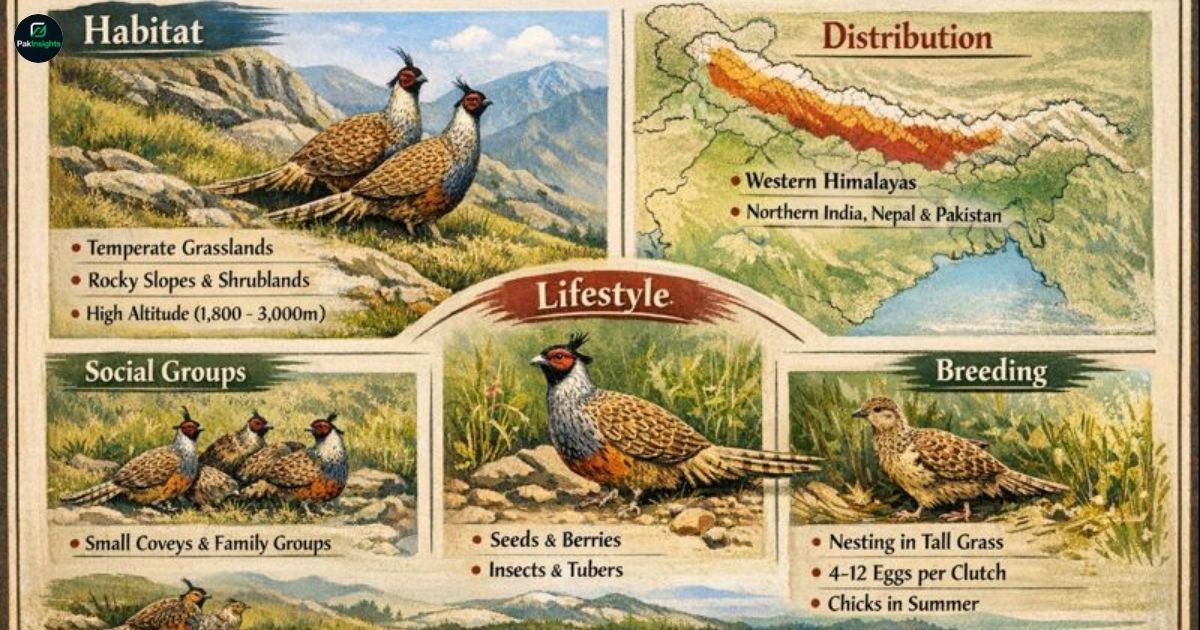
The Cheer Pheasant lives in some of the world’s most demanding landscapes. Its natural Habitat: highlands and scrublands stretches across India, Nepal, and Pakistan. These regions include Nepal bird habitats, Uttarakhand fauna, Himachal Pradesh wildlife, and Khyber Pakhtunkhwa bird zones. The species prefers elevations described as Altitude: 6000–10000 feet, where forests thin out, and rocky grasslands dominate. These areas challenge survival, yet the bird thrives through adaptation.
Lifestyle studies show how delicate its survival balance is. Research like the Dhorpatan area survey in Nepal and the Kullu district survey in India revealed stable but limited Population estimates. These studies also confirmed the bird’s extreme Sensitivity to human disturbance. Even mild grazing or tourism can disrupt nesting success. During breeding, females lay a Clutch size of 10–11 eggs, often on exposed slopes. This makes habitat stability critical for survival, especially for these High-altitude birds.
| Region | Estimated Presence | Research Insight |
|---|---|---|
| Nepal (Dhorpatan) | Moderate | Stable calling sites recorded |
| India (Kullu, Uttarakhand) | Low to Moderate | Decline linked to disturbance |
| Pakistan (KP region) | Low | Fragmented populations |
Conservation Efforts and Human Interaction
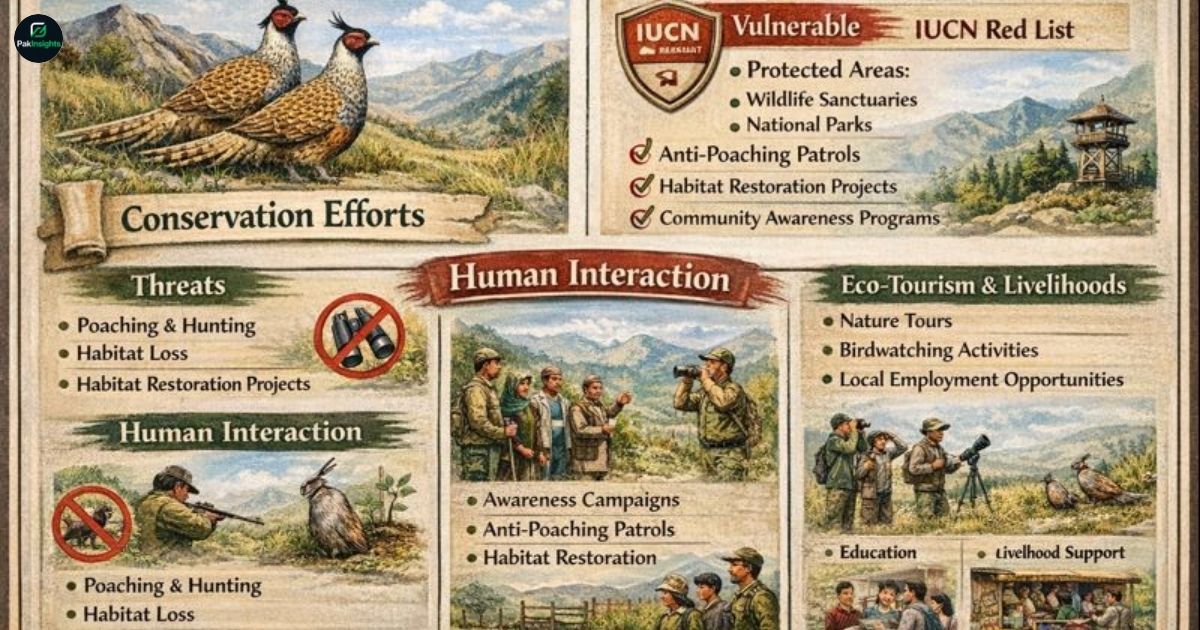
Protecting the Cheer Pheasant means protecting mountain ecosystems as a whole. The biggest threats include Habitat loss, illegal hunting, and expanding human activity. Because of these pressures, international bodies classify it as a priority species for Bird conservation. Listing under CITES Appendix I restricts trade completely, while the IUCN Red List highlights the urgent need for protection. These measures support long-term Wildlife protection across the Himalayas.
Conservation work has not been easy. Several Reintroduction attempts using captive-bred birds failed due to poor adaptation and habitat stress. Experts now agree that protecting natural habitats works better than artificial breeding alone. As one conservation biologist noted, “Saving the Cheer Pheasant means letting mountains stay wild.” For American readers, this mirrors conservation lessons learned from protecting species like the California condor. In both cases, nature responds best when human pressure steps back and ecosystems regain balance.
Frequently Asked Questions
What is a Cheer Pheasant?
The Cheer Pheasant is a rare mountain bird from the Himalayas, known for its subtle colors, long tail, and vulnerable conservation status.
Where does the Cheer Pheasant live?
It lives in high-altitude scrublands and grasslands of India, Nepal, and Pakistan, usually between 6,000 and 10,000 feet.
Why is the Cheer Pheasant endangered?
Habitat loss, hunting, and human disturbance have reduced its population, leading to its classification as a vulnerable species.
What makes the Cheer Pheasant unique?
It is the only living member of its genus and practices monogamous breeding on steep mountain cliffs.
Can the Cheer Pheasant be found in zoos?
Yes, but rarely. Some zoos keep them for conservation purposes, though reintroduction into the wild has had limited success.
Meta Description
Discover the Cheer Pheasant, a rare Himalayan bird known for its subtle beauty, high-altitude habitat, and conservation challenges.