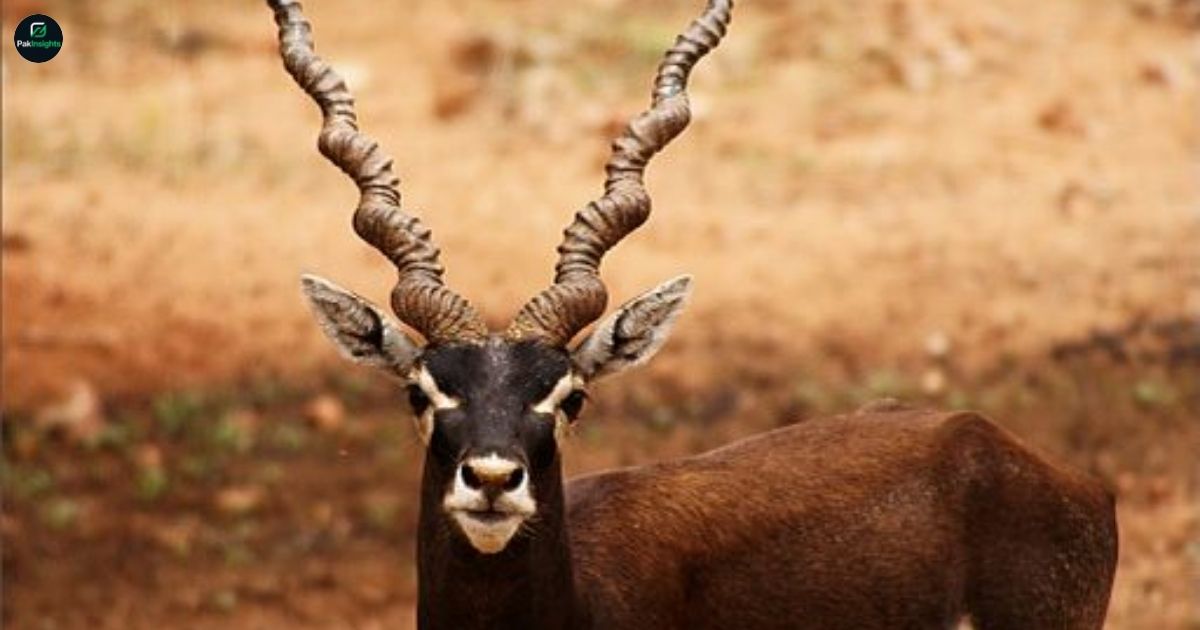
The Blackbuck is one of the most graceful Asian antelope species. Known scientifically as Antilope cervicapra, this medium-sized antelope has captivated wildlife enthusiasts across the Indian subcontinent and even in parts of Texas. This animal is also called the Indian antelope or black buck. Its elegant corkscrew horns, distinct two-tone coat, and agile movements make it a unique sight in grassy plains and lightly forested areas. Blackbucks are diurnal antelopes, active during the day, and are known for their fast running speeds, sometimes reaching up to 50 miles per hour. Despite being native to India and Nepal, populations have been introduced to the United States, Australia, and Argentina, mostly on private ranches or conservation areas.
The conservation story of the Blackbuck is fascinating. It has survived hunting, habitat loss, and natural disasters over centuries. Listed as Least Concern by the IUCN Red List, the species is still vulnerable in parts of its range. Legal frameworks like the Wildlife Protection Act 1972, Schedule I species, and CITES Appendix III ensure that the Blackbuck receives protection in its native countries. Understanding the Blackbuck’s habitat, physical features, and survival challenges is essential for appreciating its ecological and cultural significance.
Blackbuck Overview, Physical Characteristics, and Natural Habitat
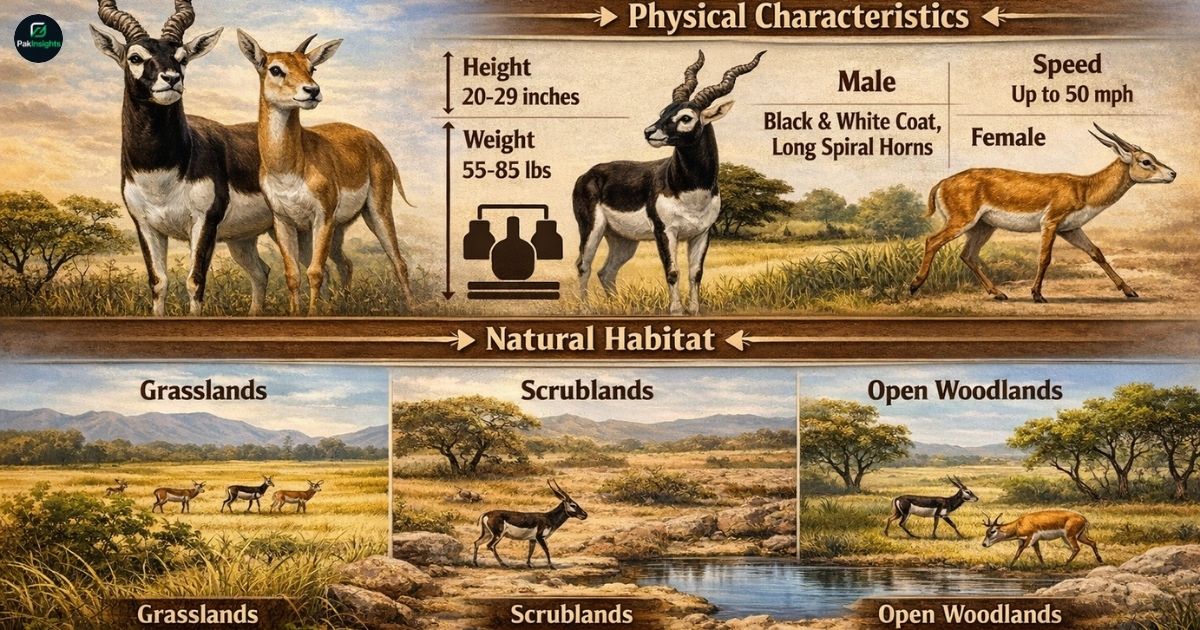
The Blackbuck is the only living member of the genus Antilope, first described by Carl Linnaeus in Systema Naturae. It belongs to the Kingdom Animalia, Phylum Chordata, Class Mammalia, Order Artiodactyla, Family Bovidae, and Subfamily Antilopinae. There are two recognized subspecies: Antilope cervicapra cervicapra and Antilope cervicapra rajputanae. The males of this species show prominent sexual dimorphism. They are heavier, darker, and grow long corkscrew horns. Females and juveniles are lighter, with fawn or beige fur. The two-tone coat features white markings on the chin, eyes, ears, belly, and inner legs, while males have dark brown to black coats on their dorsal side.
In terms of habitat, the Blackbuck prefers grassy plains with open visibility and perennial water sources. It thrives in protected wildlife areas like Velavadar National Park in Gujarat and Ranibennur Blackbuck Sanctuary in Karnataka. These grassland antelope move in bachelor herds, female herds, or small family groups. They graze on low grasses and sedges, but also show browsing behavior, occasionally feeding on acacia trees and Prosopis juliflora when grass is scarce. In Texas, Blackbucks have adapted well to ranch environments, providing opportunities for study and conservation outside their native range.
Blackbuck Population, Legal Protection, and Conservation Efforts
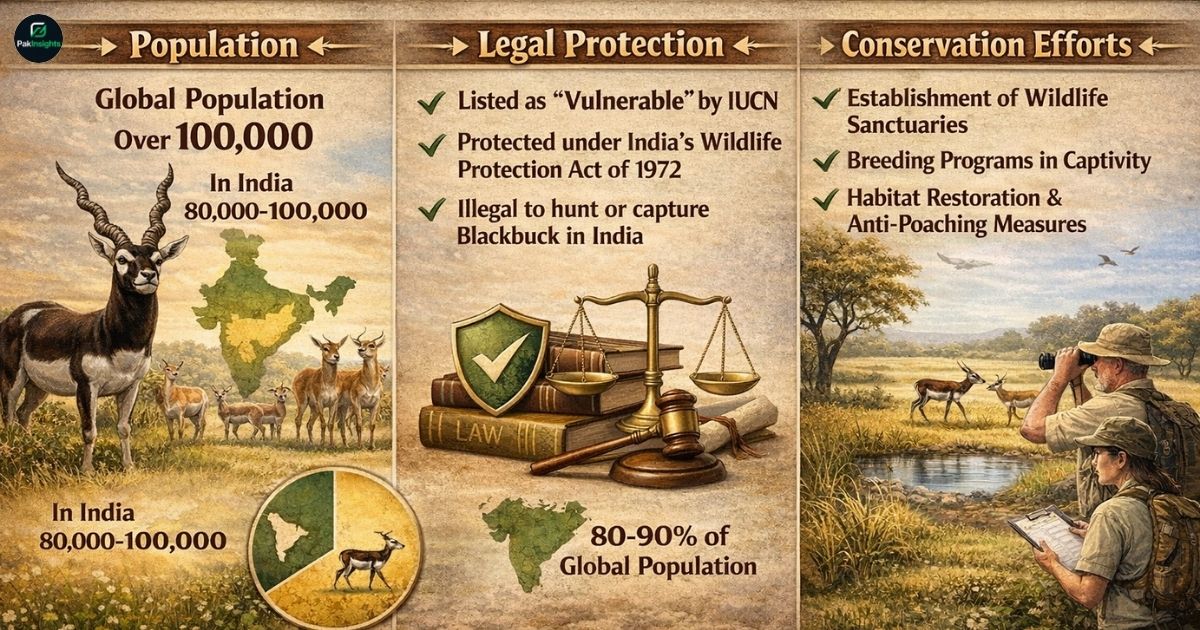
The population of Blackbuck has fluctuated over the past century. In India, small herds persist mainly in protected wildlife areas. Some populations were wiped out in Pakistan (locally extinct) and Bangladesh (locally extinct) due to habitat loss, deforestation, and excessive hunting. Today, the Blackbuck is considered a Schedule I species under the Wildlife Protection Act 1972, making hunting strictly illegal. Its protection is also reinforced internationally through CITES Appendix III, and the species is monitored by the IUCN Red List.
Conservation efforts include community participation and wildlife management programs. The Bishnoi community in India has long protected the Blackbuck, reflecting its role in cultural and religious entities like Hindu mythology, Vayu, and Chandra. Captive breeding and sanctuary programs help maintain healthy populations. In Texas, private ranches house thriving populations of Blackbuck, demonstrating how conservation outside native lands can also succeed. The efforts ensure the species survives despite threats, while also offering ecological, cultural, and educational value to human communities.
Threats to Blackbuck Survival and the Importance of Biodiversity
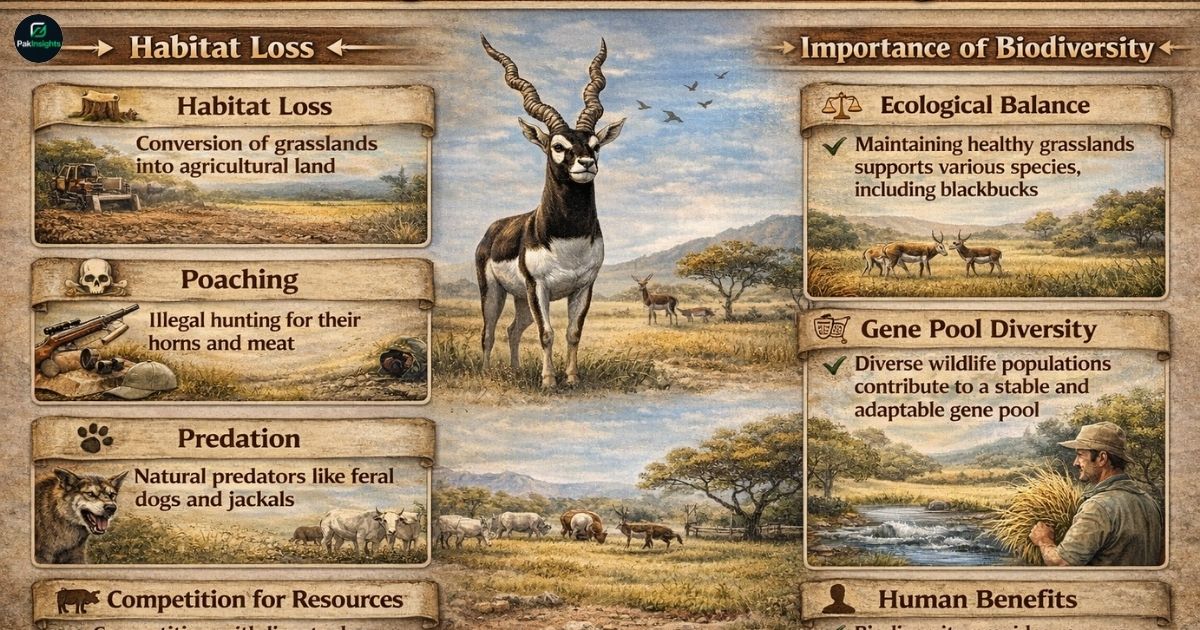
Despite protection, Blackbuck faces multiple survival threats. Poaching, habitat loss, deforestation, human-wildlife conflict, and natural hazards such as droughts and floods continue to endanger populations. Predators like the Indian wolf, golden jackal, and sometimes village dogs prey on juveniles. Males engage in intense fights during the mating season, making them vulnerable. Even well-protected populations face risks from environmental changes and fragmentation of their habitats.
The ecological role of the Blackbuck is significant. As a herbivorous diet grazer, it maintains grassland ecosystems and disperses seeds, supporting biodiversity. Its presence indicates healthy grasslands that benefit other wildlife. Historically, the species was important in the Indus Valley Civilization, and today, it retains cultural importance through the Bishnoi community and religious associations. Conserving Blackbuck not only preserves a species but also protects the ecosystems and traditions linked to it. Tables of population estimates, protected areas, and lifespan reinforce its importance:
| Attribute | Detail |
|---|---|
| Lifespan | 10–15 years |
| Male Shoulder Height | 29–33 inches |
| Male Body Weight | 44–126 lb |
| Female Body Weight | 44–73 lb |
| Horn Length | 35–75 cm |
| Native Range | India and Nepal |
| Introduced Range | Texas, Australia, Argentina |
| Conservation Status | IUCN Least Concern, CITES Appendix III, Schedule I species |
The Blackbuck continues to captivate scientists, conservationists, and wildlife enthusiasts. Its combination of speed, elegance, and cultural symbolism makes it an emblematic grassland antelope worth protecting globally.
Frequently Asked Questions
Q: Are Blackbucks native to the United States?
A: No, Blackbucks are native to India and Nepal, but small populations exist on private ranches in Texas.
Q: How fast can a Blackbuck run?
A: Blackbucks can reach speeds of up to 50 miles per hour, making them one of the fastest grassland antelopes.
Q: What do Blackbucks eat in the wild?
A: They graze on low grasses, sedges, and sometimes browse on acacia trees or Prosopis juliflora.
Q: How long do Blackbucks live?
A: Their typical lifespan is 10–15 years, depending on habitat and protection.
Q: Are Blackbucks protected by law?
A: Yes, they are a Schedule I species under India’s Wildlife Protection Act 1972 and listed in CITES Appendix III.