
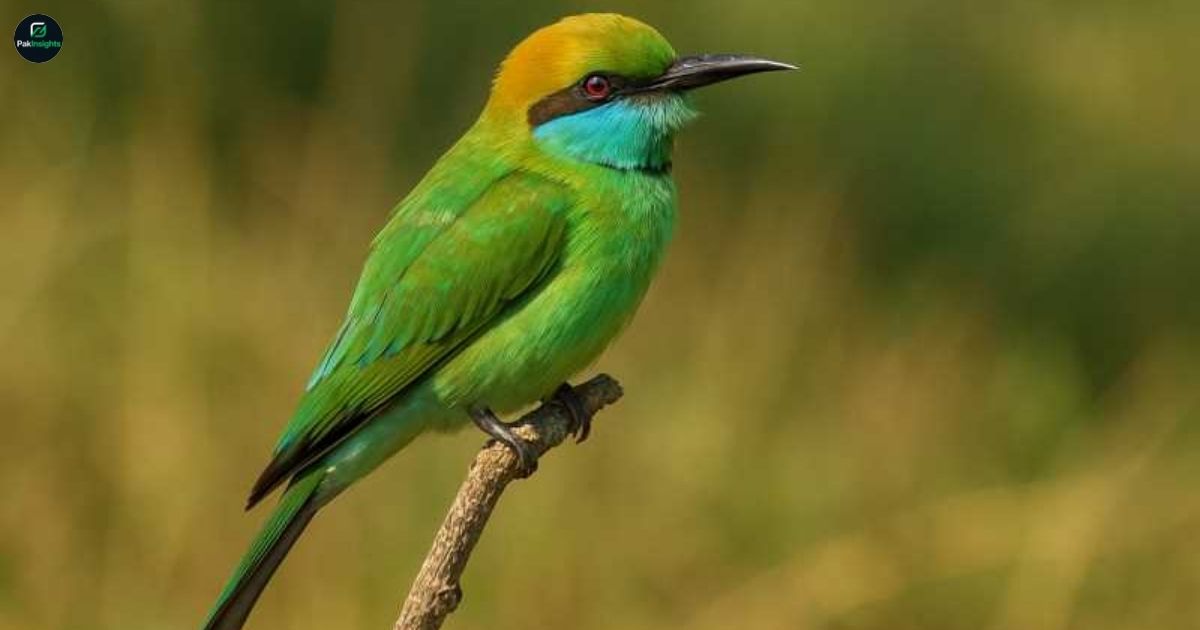
The Asian green bee-eater is one of the most colorful and fascinating birds in Asia. Also called the little green bee-eater or simply green bee-eater, it belongs to the family Meropidae and the genus Merops orientalis. This slender bird is admired for its bright green plumage, rufous crown, and long central tail feathers, making it easy to spot in grasslands, scrub, and open country. Both sexes look alike, and juveniles have paler juvenile plumage, giving them a softer, delicate look. The binomial name was first given by John Latham in 1801, and the bird falls under the scientific classification of Animalia, Chordata, Aves, and Coraciiformes.
The Asian green bee-eater is widespread across Asia, including India, Pakistan, Sri Lanka, Thailand, Vietnam, Nepal, Bhutan, and Bangladesh. It prefers plains, lowlands, riverside habitats, and even urban and suburban areas, adapting surprisingly well to human-modified landscapes. Several subspecies exist, including M. o. orientalis, M. o. ceylonicus, M. o. beludschicus, and M. o. ferrugeiceps, each showing slight plumage variation. For example, birds in western regions have a greener crown and bluer underparts, while Southeast Asian birds have a more rufous crown and face.
Overview of the Asian Green Bee-eater
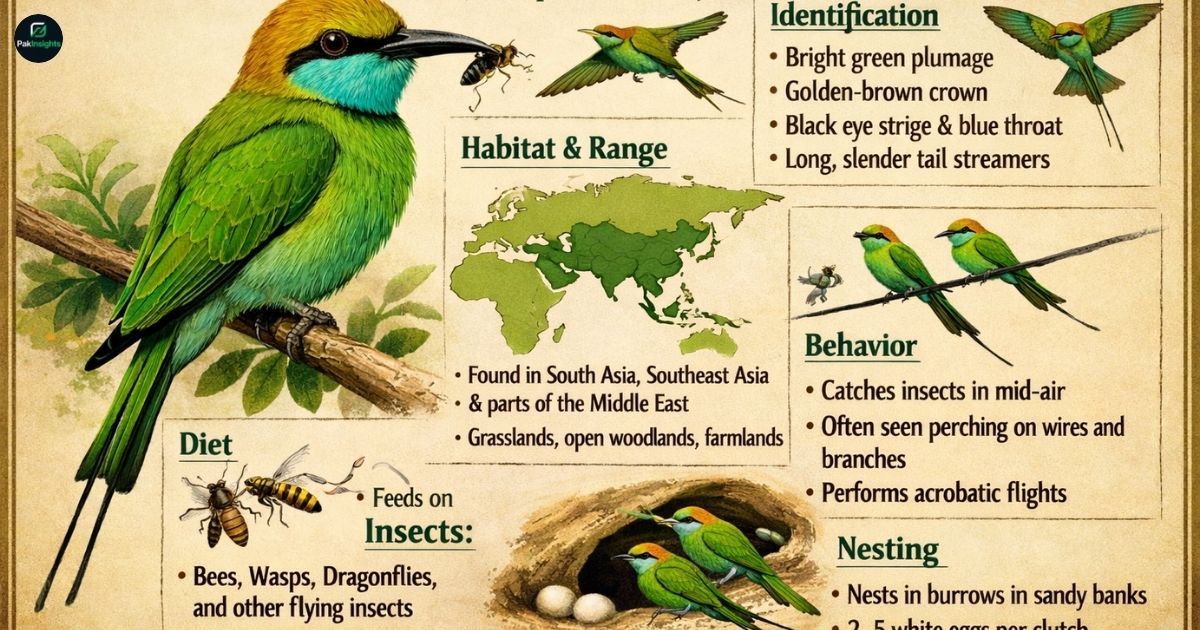
The Asian green bee-eater is easily recognized by its crimson iris, black bill, and thin black eyestripe that runs across the face. Measuring around 16–18 cm, plus 7 cm of elongated central tail feathers, this slender bird moves gracefully in flight. Its physical characteristics make it one of the most striking members of the Meropidae family. The species is insectivorous, meaning it relies heavily on insects, especially bees and wasps, which it hunts using agile aerial insect-catching skills. Even in urban areas, it can often be spotted perched on wires, scanning for flying insects.
Subspecies are easily distinguished by subtle differences in color and size. M. o. ceylonicus from Sri Lanka shows a golden brown sheen on the nape, while M. o. beludschicus from western India has a bluer face and greener crown. Some leucistic individuals with pale or almost white feathers have also been observed, adding rare beauty to the species. Their nasal trill call is a common sound in mornings and evenings, creating a lively atmosphere in their natural habitats.
Behavior and Feeding Habits
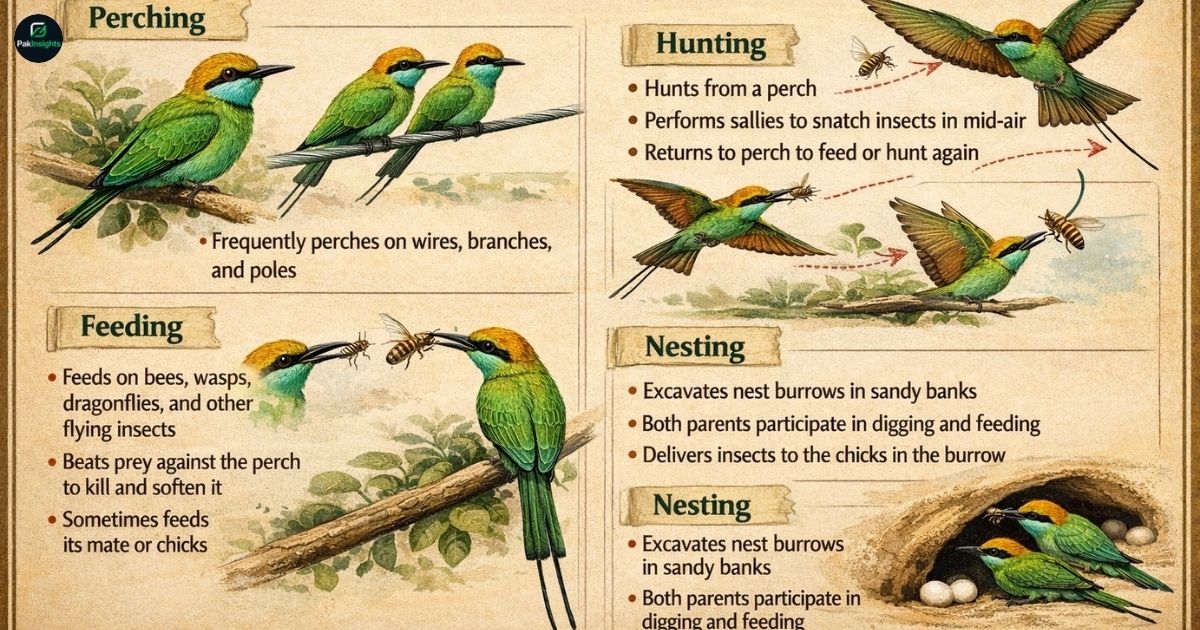
The Asian green bee-eater is highly insectivorous, feeding mainly on bees, wasps, ants, and beetles. Its hunting behavior is impressive. The bird waits patiently on a low perch, then launches into mid-air aerial insect-catching flights to grab prey. Before swallowing, it removes stings by thrashing the insect against the perch. Sometimes, it even feeds on small crabs. This bird shows observational intelligence, predicting threats from humans and predators to protect its nest.
In terms of social habits, these birds are often seen roosting communally in groups of 200–300. They enjoy sand bathing and occasionally bathe in water mid-flight. Their seasonal movement is subtle, with short-distance migration to drier or warmer regions during rainy or cold seasons. During the breeding season, March–June, they build a nest tunnel in sandy banks, laying a clutch size of 3–5 eggs. Both parents incubate the glossy white eggs for about 14 days, and the chicks fledge in 3–4 weeks. Some nests even have helpers in breeding, assisting in feeding the young.
Conservation Status and Human Interaction
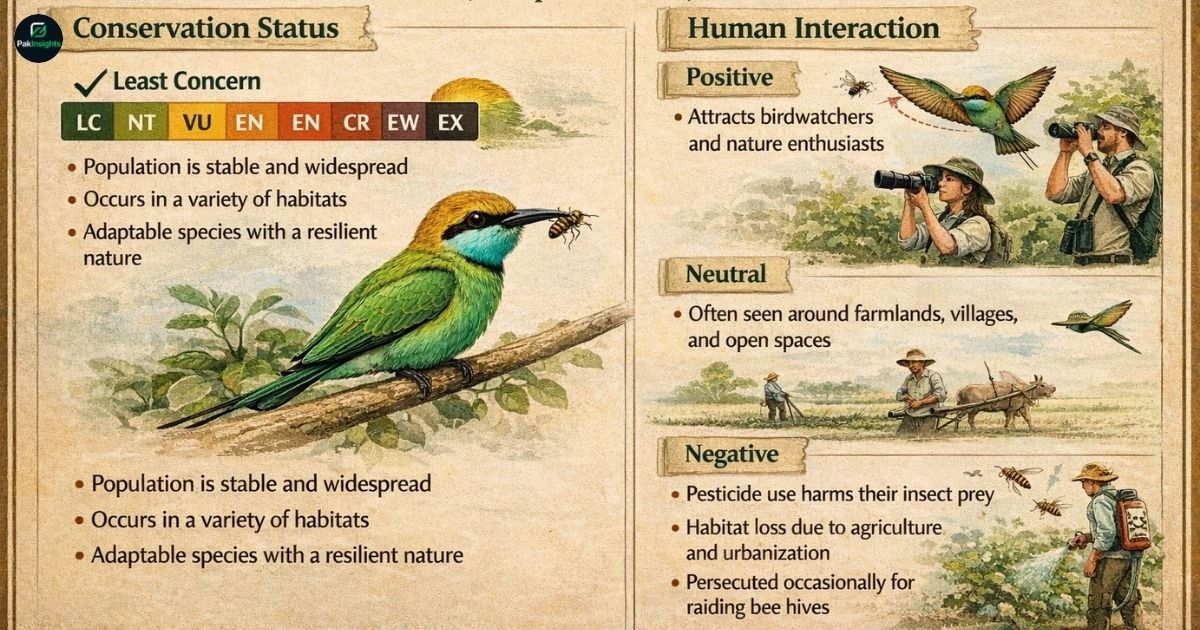
The Asian green bee-eater is listed as Least Concern (IUCN), reflecting its stable population across its natural range. However, it faces threats from habitat loss, pesticide use, and occasional human disturbance in agricultural areas. While it sometimes causes a minor impact on beekeepers, it also plays a crucial role in controlling insect populations, making it beneficial to ecosystems.
These birds are highly adaptable and can thrive in human habitations, perching on fences, antennas, and wires. Researchers have found endoparasitic nematodes in their gizzards and blood protozoal parasites, but these rarely affect population numbers. Protecting their grasslands, plains, and riverside habitats ensures they continue to survive and flourish. Interestingly, the Asian green bee-eater often teaches us how wildlife can coexist with humans in urban spaces without losing natural beauty.
Table: Subspecies of Asian Green Bee-eater
| Subspecies | Distribution | Key Features |
|---|---|---|
| M. o. orientalis | India, Nepal, Bhutan, Bangladesh | Rufous head and neck, bright green underparts |
| M. o. ceylonicus | Sri Lanka | Golden brown nape, subtle plumage variations |
| M. o. beludschicus | Iran to Pakistan, western India | Bluer face, greener crown |
| M. o. ferrugeiceps | NE India, Myanmar, Thailand, Laos, Vietnam | Rufous crown and nape, strong rufous coloring |
The Asian green bee-eater is a symbol of beauty, intelligence, and adaptability. Its striking bright green plumage, fascinating hunting behavior, and unique nesting in sandy banks make it a bird worth observing. From urban areas to riverside habitats, this little green bee-eater reminds us that nature’s wonders are often closer than we think.
Frequently Asked Questions
Q1: What is an Asian Green Bee-eater?
The Asian Green Bee-eater is a small, brightly colored bird, also called the little green bee-eater, found across Asia.
Q2: What does it eat?
It is insectivorous, feeding mainly on bees, wasps, ants, and beetles, which it catches in mid-air.
Q3: Where does it live?
It lives in grasslands, plains, scrub, riverside habitats, and even urban and suburban areas.
Q4: How does it nest?
It practices solitary nesting, digging a nest tunnel in sandy banks and laying 3–5 glossy white eggs.
Q5: What is its conservation status?
The species is listed as Least Concern (IUCN) but benefits from habitat protection and reduced pesticide use.
Meta Description
Discover the Asian Green Bee-eater, its vibrant plumage, behavior, habitat, and conservation across Asia.