
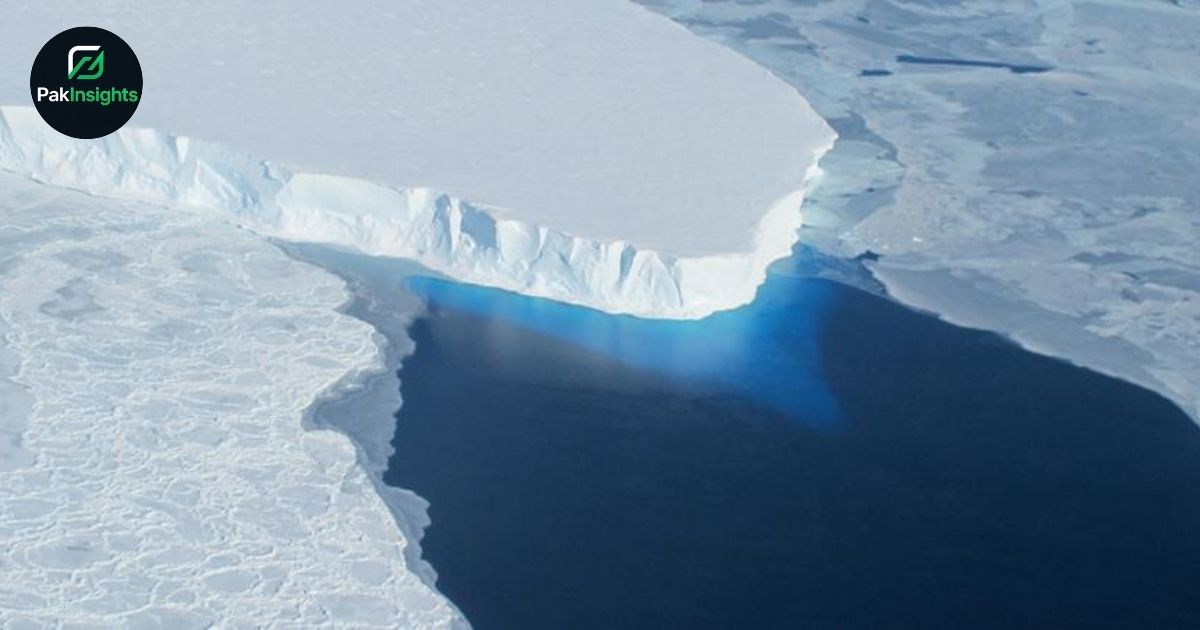
Antarctica’s Thwaites Glacier: Cracks Spread Faster Than Melting, according to a recent study. The glacier, also called the Doomsday Glacier, is fracturing from within, and these cracks now outpace Antarctic ice melt. Scientists warn that this acceleration could significantly impact global sea level rise.
Researchers at the University of Manitoba, led by Debangshu Banerjee, analyzed 20 years of satellite and GPS glacier data. They tracked a fragile shear zone ice fracture that stretches across the glacier. As cracks deepen, the ice shelf disintegrates, weakening the glacier’s grip on the underwater ice ridge, known as its pinning point.
The study highlights a dangerous positive feedback loop in glaciers. Once fractures form, the glacier speeds up, creating more cracks. This cycle could trigger a partial glacier collapse in the West Antarctic Ice Sheet. While a full collapse may take centuries, ice loss acceleration today may influence sea levels by the 23rd century.
Thwaites Glacier acts like a cork holding back massive ice sheets. If it disintegrates, land-based ice will flow into the ocean, increasing the risk of coastal flooding and stronger storm tides. These changes could raise insurance costs and threaten coastal communities globally.
Monitoring efforts by the British Antarctic Survey continue, using satellite imaging and field studies. They emphasize the urgent need to understand glacier cracking patterns and the climate change impact on ice. Every small fracture could contribute to larger instability, making this research vital for future predictions.
Conclusion:
Antarctica’s Thwaites Glacier faces unprecedented fracturing, with cracks spreading faster than melting. Understanding these changes is essential to anticipate sea level rise and protect coastal regions.
Meta Description
Antarctica’s Thwaites Glacier cracks spread faster than melting, raising risks of global sea level rise and coastal flooding.