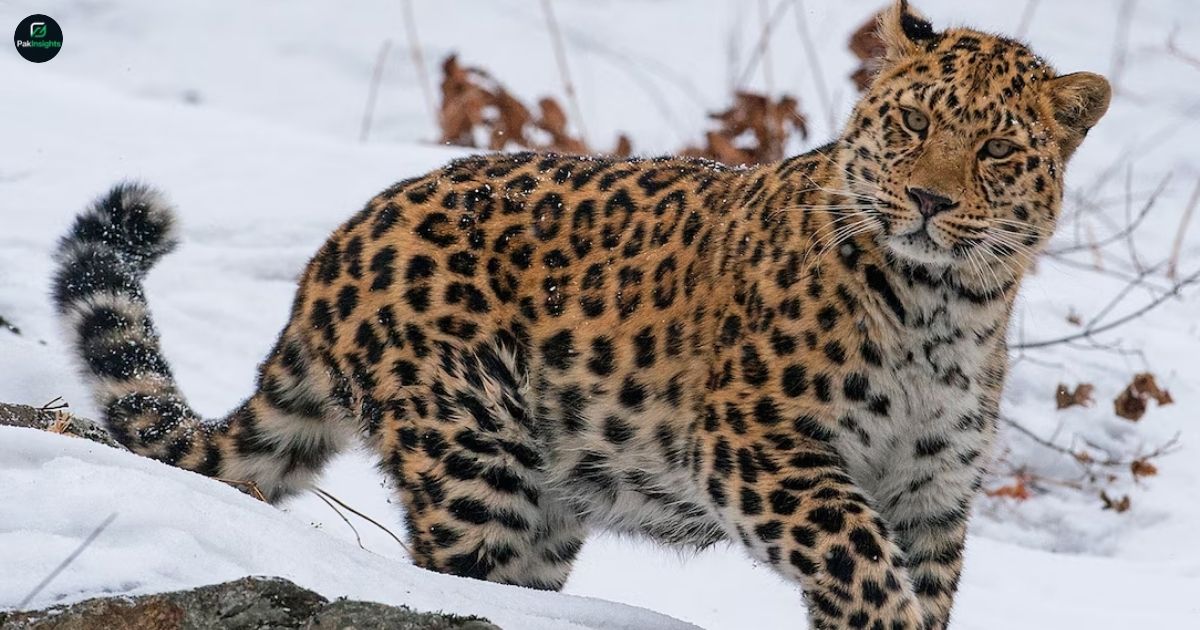
The Amur leopard is often called the rarest big cat on Earth. Known scientifically as Panthera pardus orientalis, this Critically Endangered leopard lives in the cold forests of the Russian Far East and Northeastern China. With fewer than 130 wild individuals, every sighting is precious. This rare leopard species is also called the Siberian leopard, Far Eastern leopard, or Korean leopard, reflecting its historical range across Manchuria and the Korean Peninsula. Their survival is a testament to resilience in extreme winters, deep snow, and rugged terrain. Scientists and conservationists have closely studied them for decades, revealing fascinating details about their lives, genetic diversity, and adaptability.
This big cat’s story is one of both beauty and fragility. From the Primorye region to the Sikhote-Alin Mountains, its existence is a race against time. Every measure, from habitat monitoring to anti-poaching teams, is crucial for population recovery. Understanding their history, biology, and threats helps us connect with this mysterious predator and underscores why global attention is essential.
Physical Characteristics and Unique Adaptations
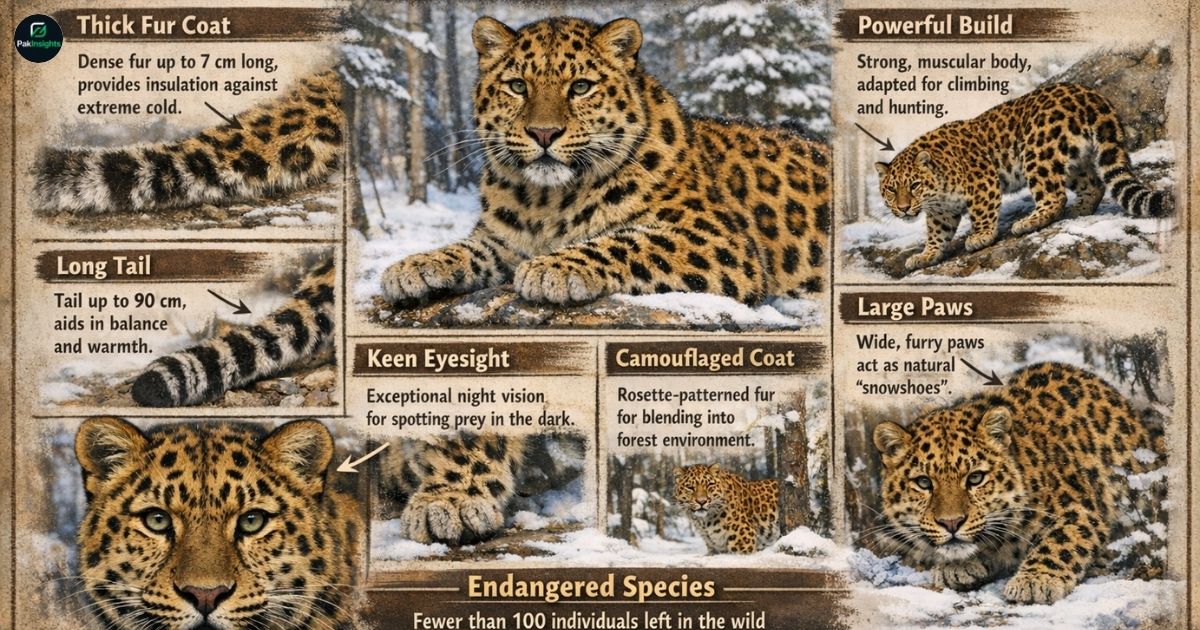
The Amur leopard is known for its cream-colored fur and thick winter coat, which keeps it warm in freezing temperatures. Its rosette pattern is distinct, with large, unbroken rings and dark centers. Males are bigger, with a body size ranging from 107–136 cm and a tail of 82–90 cm, while females weigh slightly less. The dense fur not only protects against cold but also camouflages them in snowy forests. Their long limbs, muscular build, and strong claws make them agile hunters. Even their tail is an adaptation, balancing them while moving through snow and steep slopes.
Unlike other leopards, the Amur leopard has developed unique traits to survive in harsh climates. Their sub-adult and adult individuals display remarkable endurance and stealth. Researchers studying genetic diversity found this subspecies has suffered from inbreeding depression, yet they continue to thrive in isolated forests. This rare leopard species demonstrates nature’s resilience, blending elegance and survival instincts in one of the coldest habitats for big cats.
Habitat, Range, and Conservation Status

The Amur leopard inhabits the Primorye region, Jilin Province, and Heilongjiang Province, favoring mountainous areas with forests and river valleys. Its historical range extended to Manchuria, the Korean Peninsula, and even near Beijing. Today, populations are fragmented, living in protected areas such as the Kedrovaya Pad Nature Reserve and along the Tumen River. The species is listed in CITES Appendix I and the IUCN Red List as Critically Endangered, facing severe habitat loss, deforestation, and threats from forest fires.
Conservationists track these leopards across the Sikhote-Alin Mountains and the Changbai Mountains, noting their migration routes and home range. Populations are small, so every loss impacts genetic health. Wildlife conservation efforts, such as protected areas and habitat monitoring, are vital to prevent extinction. The Far Eastern leopard now survives in patches of forests near the Sea of Japan, making human intervention critical for population recovery.
Behavior, Diet, and Reproduction
The Amur leopard is solitary, except when mothers raise cubs. Its diurnal and crepuscular activity makes it active during dawn, dusk, and sometimes daytime. They exhibit territorial behavior, often marking and defending areas spanning 5,000–30,000 hectares. Their hunting patterns are precise, following the migration routes of prey. Primary prey species include Siberian roe deer, Manchurian sika deer, Ussuri wild boar, and occasionally Amur elk, hares, badgers, fowl, and mice.
Reproduction begins at 2–3 years of age, with gestation lasting 92–95 days. Cubs weigh 500–700 grams at birth and open their eyes after a week. Mothers teach hunting and survival skills to juveniles from 18 months to 2 years. Studies in Kedrovaya Pad Nature Reserve show that litters often contain two or three cubs, but survival rates vary due to small population sizes and environmental pressures. These sub-adult and adult individuals rely on their mother’s guidance to navigate their harsh habitat.
Conservation Efforts and How You Can Help
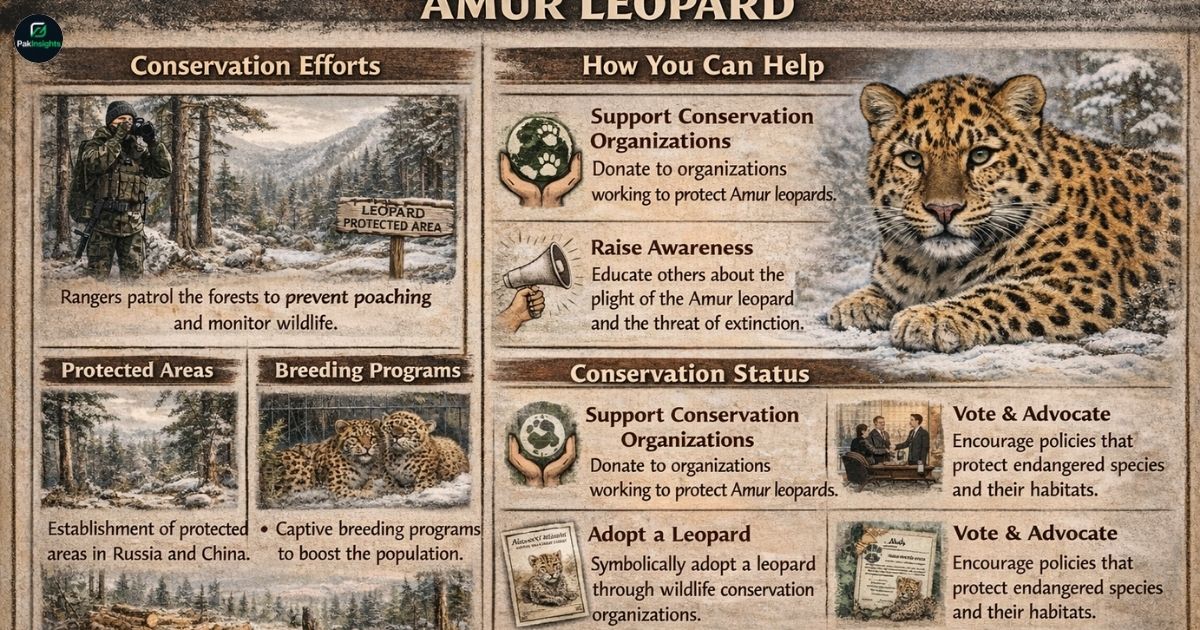
The Amur Leopard and Tiger Alliance (ALTA) leads major initiatives for this rare leopard species, combining efforts of Russian and Chinese organizations. They maintain anti-poaching teams, monitor populations via camera traps, and run captive breeding programs under the European Endangered Species Programme (EESP). Zoos in America and Canada also participate in population management, ensuring genetic pedigree is preserved. Reintroduction programs aim to expand the wild population in the Russian Far East and along the China-Russia border.
You can help too. Supporting wildlife conservation, donating to ALTA, or spreading awareness through education programs and public awareness campaigns contribute to population recovery. Watching wildlife documentaries on Planet Earth or Animal Planet inspires understanding and empathy. Every action counts for the survival of this majestic Siberian leopard, which embodies the delicate balance between nature and human responsibility.
Table: Quick Facts About the Amur Leopard
| Feature | Details |
|---|---|
| Scientific Name | Panthera pardus orientalis |
| Status | Critically Endangered leopard |
| Population | ~130 wild individuals |
| Habitat | Primorye region, Sikhote-Alin Mountains, Jilin & Heilongjiang |
| Prey | Siberian roe deer, Manchurian sika deer, Ussuri wild boar, Amur elk |
| Life Span | 10–15 years in the wild, up to 21 in captivity |
| Unique Traits | Cream-colored fur, rosette pattern, dense winter coat |
| Conservation | ALTA, CITES Appendix I, captive breeding programs, protected areas |
Frequently Asked Questions
Q1: What is an Amur Leopard?
The Amur Leopard is a Critically Endangered leopard subspecies, also called Panthera pardus orientalis, native to the Russian Far East and Northeastern China.
Q2: How many Amur leopards are left in the wild?
There are approximately 130 wild individuals, making it the rarest big cat in the world.
Q3: Where do Amur leopards live?
They inhabit the Primorye region, Sikhote-Alin Mountains, and forested areas in Jilin and Heilongjiang Provinces.
Q4: What do Amur leopards eat?
Their diet includes Siberian roe deer, Manchurian sika deer, Ussuri wild boar, Amur elk, hares, badgers, fowl, and mice.
Q5: Why is the Amur leopard endangered?
Main threats are poaching, habitat loss, forest fires, deforestation, and inbreeding depression.