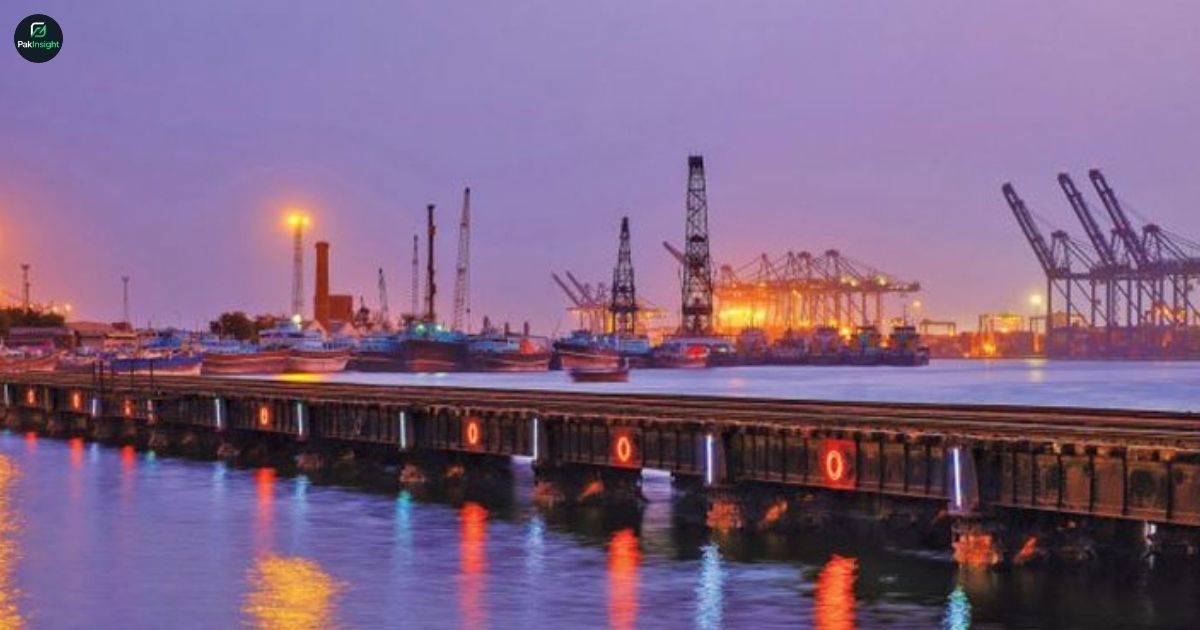
Pakistan has marked a major milestone in its maritime sector with the arrival of its first multi-cargo transshipment vessel, a development centered at Karachi Port. The arrival of the Karachi transshipment vessel signals a new phase in the country’s trade and shipping operations, expanding beyond traditional container handling to more diverse cargo services.
The vessel, identified as M.V. ERLIN, berthed at the KGTML terminal of Karachi Port Trust (KPT). Officials say this is the first time Pakistan has handled a fully transshipment ship capable of carrying multiple types of freight, including general cargo, break-bulk goods, and vehicles.
Federal Minister for Maritime Affairs Muhammad Junaid Anwar Chaudhry described the development as a significant transformation in port operations. He said Pakistan’s ports are now better positioned to support regional trade and improve logistical efficiency.
A major shift at Karachi Port
Karachi Port has long served as Pakistan’s primary gateway for imports and exports. However, its transshipment activity was previously limited mostly to container-based cargo.
With the arrival of the M.V. ERLIN, that model is changing. Officials confirmed that Karachi Port can now handle a broader range of cargo types through transshipment, including non-containerized goods.
Minister Chaudhry called the development a “quantum leap” in the country’s maritime capacity. He linked it to recent reforms aimed at improving operational efficiency, reducing trade bottlenecks, and making Pakistan more competitive in regional shipping markets.
According to the ministry, this shift allows Karachi Port to function not only as a national trade hub but also as a transit point for international cargo moving between regional destinations.
What the vessel brings to Pakistan’s trade system
The newly arrived transshipment vessel is designed to handle multiple cargo categories in a single operation. This includes general goods, heavy machinery, break-bulk cargo, and automobiles.
Officials say this flexibility can significantly improve port efficiency. It reduces delays caused by separate handling systems and allows faster movement of goods through Karachi.
Previously, Pakistan’s transshipment operations were mainly limited to containerized shipments. The inclusion of break bulk and vehicle transport marks a broader capability upgrade for the country’s maritime infrastructure.
Experts believe this development could help attract more shipping lines to use Karachi as a regional transit hub. It may also reduce pressure on nearby ports by offering more advanced cargo handling options.
Economic and regional impact
Government officials view the arrival of the Karachi transshipment vessel as a step toward strengthening Pakistan’s position in regional and global trade networks.
By expanding cargo handling capabilities, Pakistan aims to increase port traffic and boost revenue from transit trade. The move is also expected to support logistics companies, exporters, and importers by offering more flexible shipping routes.
The Ministry of Maritime Affairs stated that Pakistani ports are now fully equipped to handle all types of transshipment and transit cargo. This includes services that can connect trade routes across the Middle East, Central Asia, and beyond.
Analysts suggest that improved transshipment capacity could help Pakistan compete with established regional ports. It may also encourage long-term investment in port infrastructure and logistics development.
A step toward a maritime hub
Officials believe this development aligns with Pakistan’s long-term goal of becoming a key maritime hub in the region. The expansion of Karachi Port’s capabilities will strengthen its role in international shipping routes.
With increasing global trade movement through the Arabian Sea, Pakistan aims to position itself as a strategic link between East and West.
The successful docking of the M.V. ERLIN marks the beginning of what authorities describe as a more advanced and diversified shipping system. Industry observers will now be watching how quickly this model expands and whether more vessels follow this new route.