The Gaza water crisis has reached alarming levels, with Doctors Without Borders (MSF) accusing Israeli authorities of deliberately restricting access to clean water in the besieged territory. In a new report, the humanitarian organization says water shortages are being used as a “tool of collective punishment,” worsening an already catastrophic humanitarian situation in Gaza.
The allegations come at a time when Gaza continues to face widespread destruction of civilian infrastructure, ongoing violence, and severe shortages of essential supplies, including food, fuel, and medical aid.
MSF raises alarm over worsening water shortage
The international medical charity Doctors Without Borders has claimed that the Gaza water crisis is not only the result of war damage but also of systematic restrictions on water-related supplies entering the territory.
In its latest report, MSF alleges that Israeli authorities have “systematically obstructed” access to clean water by damaging and disabling key infrastructure, including pipelines, desalination plants, and sewage systems.
The organization argues that these actions have contributed to what it calls “engineered scarcity,” leaving millions of Palestinians in Gaza struggling to meet basic daily water needs.
MSF emergency officials warn that the lack of safe drinking water is directly threatening civilian survival. They stress that water is not only a humanitarian necessity but also essential for hospitals, hygiene, and disease prevention.
Nearly 90% of water systems are reportedly damaged
According to the report, data from international institutions such as the United Nations, European Union, and World Bank suggest that nearly 90% of Gaza’s water and sanitation infrastructure has been damaged or destroyed during the ongoing conflict.
This includes desalination facilities that convert seawater into drinking water, groundwater boreholes, pipelines that distribute water, and sewage treatment systems.
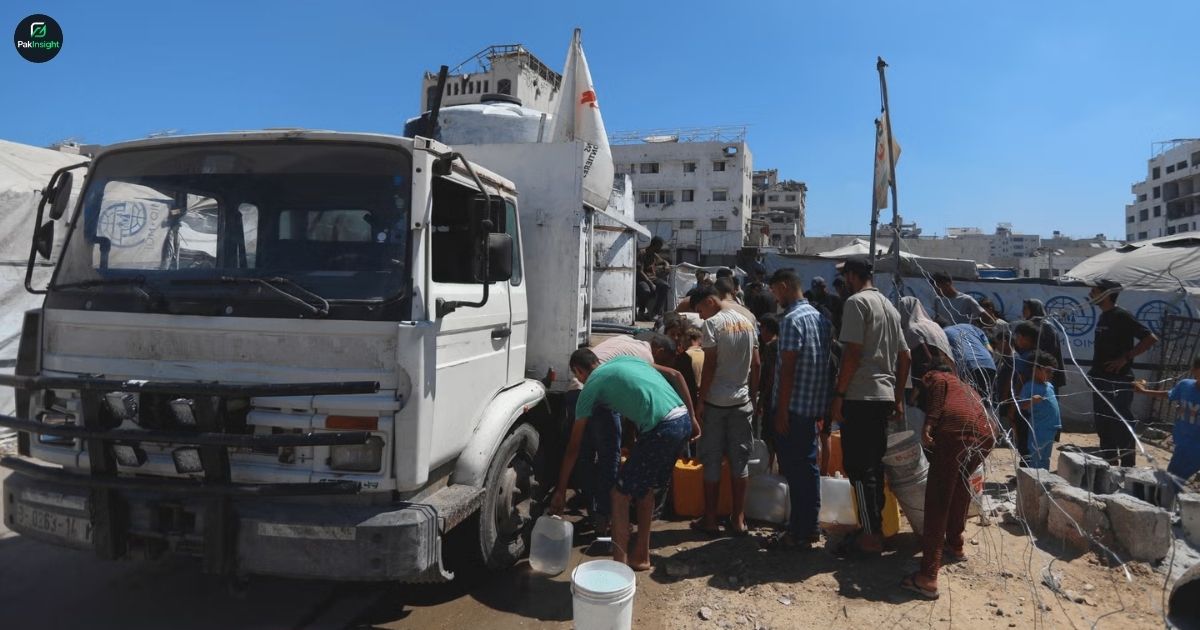
Many Gaza residents now rely on unsafe, limited water sources, increasing risks of disease and health crises.
MSF claims the destruction of this infrastructure, combined with restrictions on repair materials and fuel, has made restoration efforts extremely difficult.
Humanitarian impact deepens across Gaza
The worsening Gaza water crisis is severely affecting civilians, especially children, patients, and displaced families in overcrowded shelters.
Hospitals are reportedly struggling to maintain hygiene standards due to limited water supply, raising concerns about infections and disease outbreaks. Families are forced to ration water for drinking, cooking, and washing, often prioritizing survival over basic sanitation.
Humanitarian workers say the situation is most dangerous in displacement camps, where thousands rely on a few irregular water points.
MSF warns water shortages are worsening crises in Gaza, including malnutrition, poor sanitation, and collapsing healthcare.
Ongoing conflict and disputed claims
The report comes amid ongoing tensions following the October 2023 Hamas attack on Israel. Although ceasefire agreements have been announced at different stages, both sides have repeatedly accused each other of violations.
Israel has not publicly responded in detail to MSF’s latest report at the time of writing. Israeli officials have said restrictions are due to security concerns and ongoing hostilities in Gaza.
MSF says conditions remain fragile despite pauses in fighting, with civilians still bearing the highest cost.
Global concern over humanitarian access
International aid agencies have repeatedly warned that Gaza is facing one of the most severe humanitarian crises in recent years. Access to clean water is now considered one of the most urgent challenges alongside food insecurity and healthcare collapse.
Humanitarian groups are urging immediate access to water repair materials, fuel, and aid to prevent further deterioration in living conditions.
Experts say that without large-scale restoration of water systems, the long-term health impact on Gaza’s population could be devastating.
In Pakistan, issues in the Middle East draw strong attention on social media and in humanitarian circles. The Gaza water crisis is now a key test of international law and civilian protection in war.