
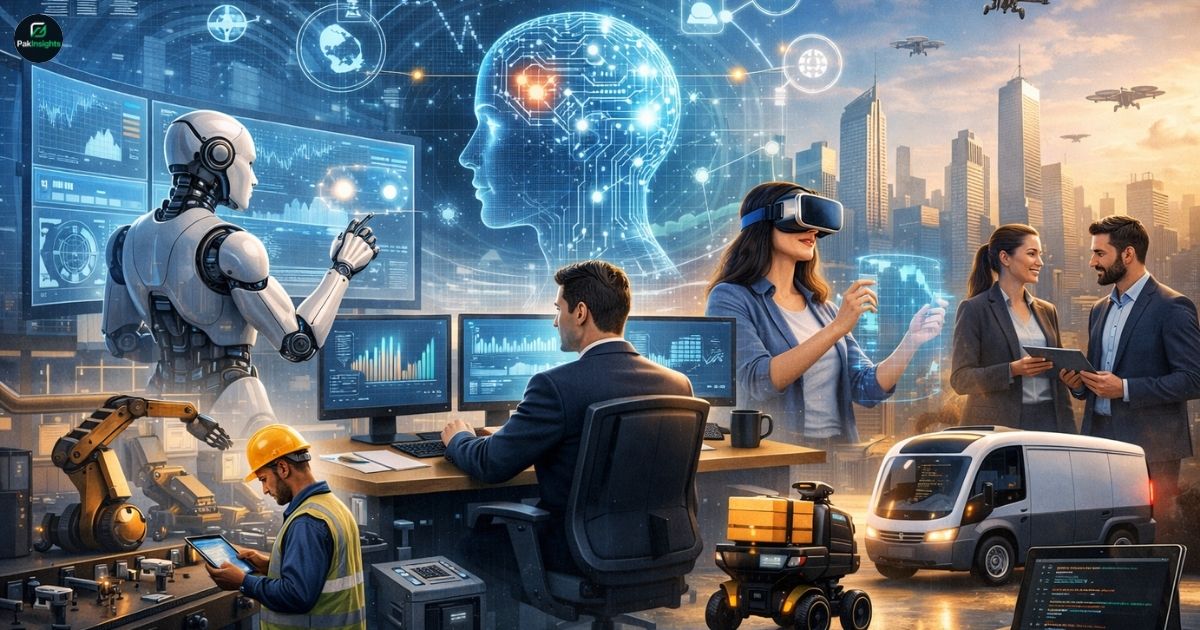
Artificial Intelligence is no longer just a futuristic idea. Today, Artificial Intelligence Is Transforming the Job Market across the USA in ways that are visible and measurable. From small businesses to multinational corporations, AI in the workplace is changing how work is done, who does it, and which skills are needed. Tools like ChatGPT, Gamma, and Numerous AI are not only automating tasks but also creating new opportunities for workers ready to adapt. For example, industries like AI in healthcare and AI in manufacturing are seeing productivity increase while certain repetitive roles decline. This transformation brings both challenges and opportunities for American workers as AI job automation becomes a central factor in career planning.
Experts estimate that the AI impact on employment could generate $13 trillion in global economic activity by 2030. While some fear job loss, others see job creation and job displacement happening simultaneously. For example, while traditional roles in warehouses or data entry may shrink, emerging AI careers in machine learning, data analysis, and AI-powered technologies are growing rapidly. The key for workers is to embrace reskilling and upskilling to stay relevant. In the USA, this means developing both technical and soft skills to complement automation rather than compete with it.
The Current Impact of AI on Employment
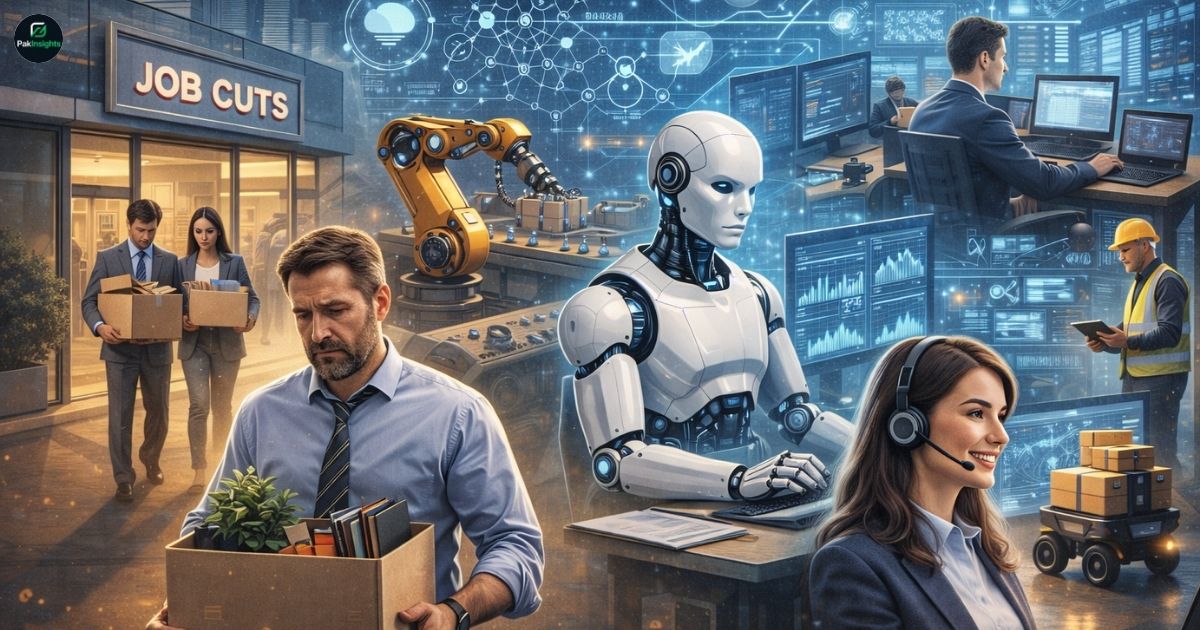
Across American industries, AI adoption in industries has accelerated dramatically. Companies in retail, finance, healthcare, and manufacturing are implementing workforce automation to streamline operations. For example, customer service centers now use AI in customer service to answer common queries, freeing employees for more complex tasks. Similarly, automation in retail, warehouses, and accounting is replacing repetitive jobs, but it also enhances efficiency and reduces human error. According to McKinsey, around 70% of US companies will have adopted at least one type of AI tool by 2030. This demonstrates that AI affecting white-collar workers is not just a theory—it is happening now, and it affects both large corporations and small businesses.
At the same time, AI-driven productivity is helping workers achieve more in less time. In AI in healthcare, for example, algorithms can analyze patient data faster than humans, allowing doctors to focus on treatment plans rather than manual data entry. In education, AI in education tools personalize learning, providing teachers with better insights to support students. Even in manufacturing, robotics and automation are making assembly lines safer and more efficient. These shifts show that Human jobs vs AI jobs is not a simple replacement story; it is a story of transformation, where humans and AI work together to achieve greater results.
Balancing Automation and Human Skills
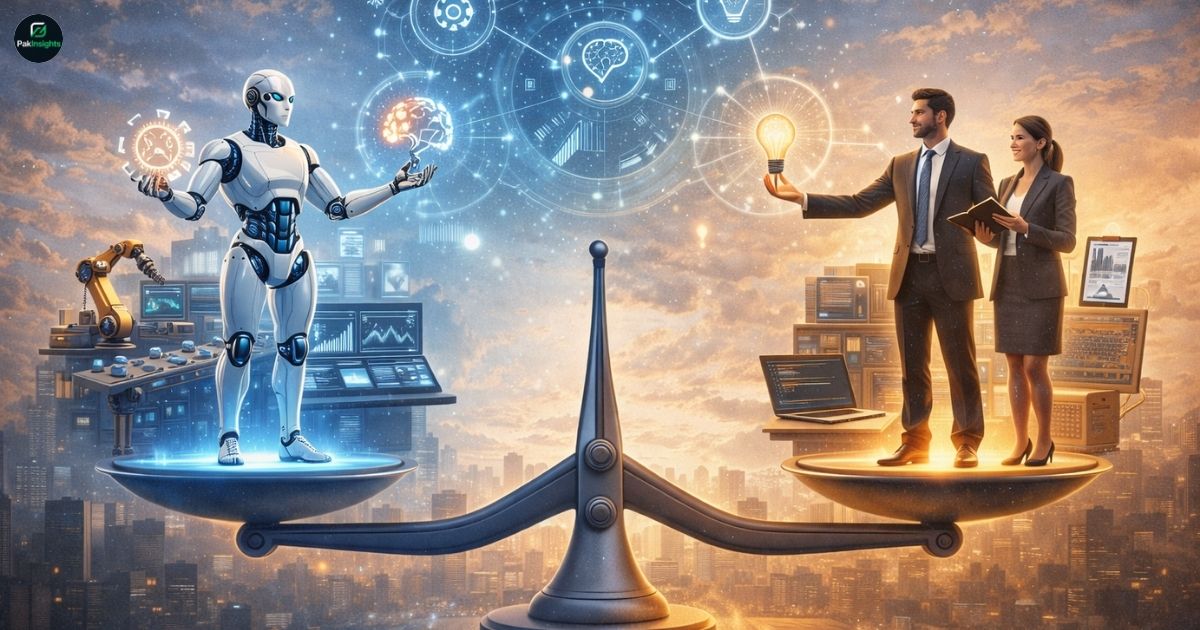
While AI replacing manual repetitive tasks is a reality, humans still bring unique value. Creativity, critical thinking, and emotional intelligence cannot be fully replicated by machines. Roles like AI in professional services (lawyers, teachers, surgeons) or AI in leadership roles (CEOs, managers) require judgment, empathy, and strategic decision-making. This is why AI and soft skills development are crucial for workers. Combining technical expertise with strong interpersonal skills ensures that humans remain indispensable even as AI continues to advance.
Career adaptability is also essential in the career transition inthe AI era. Workers should focus on learning AI skills for the future workforce, such as using generative AI tools for research, content creation, or analytics. Short online courses and certifications in machine learning or AI-powered technologies can accelerate career growth. The table below shows a comparison of jobs that are highly affected by AI and those more resistant to automation:
| Highly Affected Jobs | Resistant Jobs |
|---|---|
| Customer Service Representatives | Surgeons |
| Bookkeepers/Accountants | Teachers |
| Warehouse Workers | HR Managers |
| Retail Cashiers | Psychologists |
| Data Entry Analysts | CEOs / Directors |
This illustrates that AI career opportunities / AI skill development are concentrated in roles that require creativity, problem-solving, and human judgment. Workers who combine AI knowledge with these skills will thrive in the evolving future of work.
Future Predictions for AI and Work
Looking ahead, Artificial Intelligence Is Transforming the Job Market at an unprecedented pace. By 2030, experts predict that automation could replace 30% of current roles, particularly in clerical and repetitive positions. However, new roles are emerging rapidly, especially in machine learning jobs, AI in data analysis, and AI-powered technologies. The USA will see significant growth in AI career opportunities, with high demand for workers who can manage AI systems, interpret complex data, and innovate new solutions. This is a positive signal for those willing to embrace reskilling and upskilling in their fields.
At the societal level, the economic impact of AI ($13 trillion, GDP growth) will be felt across multiple sectors. Industries affected by AI, such as retail, healthcare, manufacturing, and customer service, will benefit from enhanced efficiency, lower costs, and increased productivity. Ethical considerations and AI ethics, and societal implications must guide the adoption of automation, ensuring that workforce transitions are fair and inclusive. Workers who adopt AI and lifelong learning strategies will gain a competitive advantage. By focusing on specialized knowledge and human creativity, Americans can leverage AI-enhanced productivity and convenience to excel in an AI-driven economy.
Frequently Asked Questions
Q1: Will AI take all human jobs?
No, AI will replace repetitive tasks, but humans are still needed for creativity, decision-making, and leadership roles.
Q2: Which jobs are most affected by AI?
Customer service, bookkeeping, warehouse work, and retail roles are highly affected, while surgeons, teachers, and HR managers remain largely safe.
Q3: What new careers will AI create?
AI is creating jobs in machine learning, data analysis, AI development, robotics, and AI-powered technologies.
Q4: How can workers prepare for AI in the workplace?
By reskilling, upskilling, developing AI skills for the future workforce, and focusing on soft skills like critical thinking and problem-solving.
Q5: How does AI impact the economy?
AI could add trillions to global GDP by boosting productivity, innovation, and efficiency across industries.