
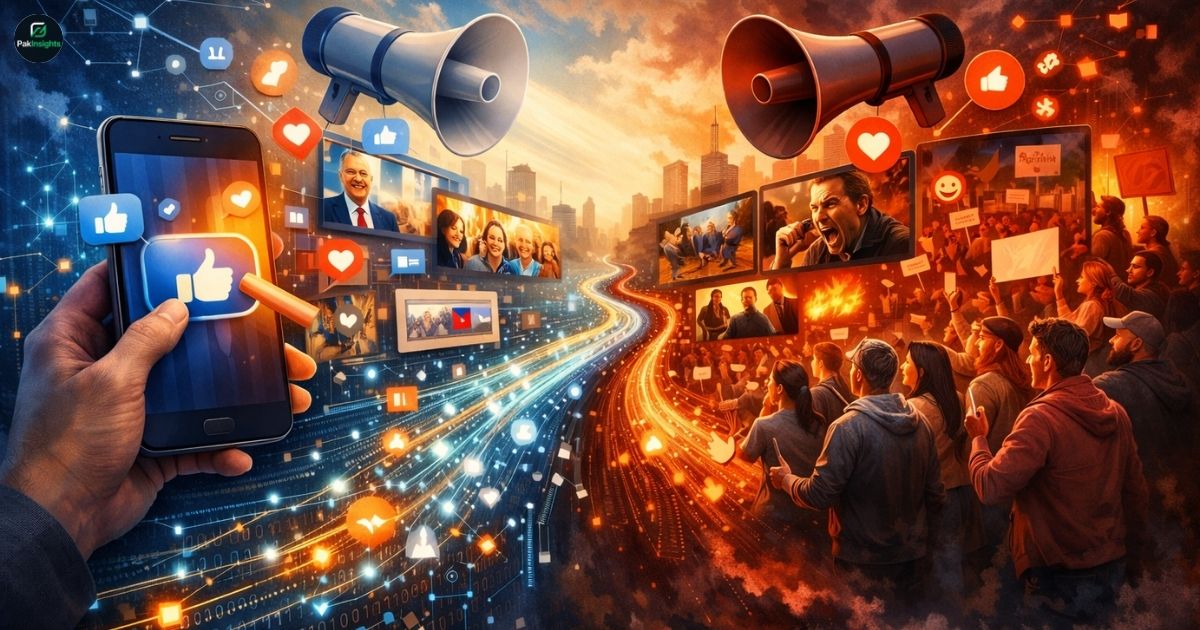
Social media has transformed how Americans see the world. Social media algorithms quietly guide what we notice, share, and believe. These algorithms don’t just randomly show content. They use complex calculations to decide what goes viral. The result is that social media influence can shape public opinion formation faster than ever. Every post, video, or story is filtered through an invisible system that rewards engagement. This makes some content explode while other information quietly fades.
Influencers now play a huge role in this system. They produce content that aligns with their audience’s values and exploits viral attention to maximize reach. This combination of audience participation, algorithmic rules, and content strategy creates a powerful engagement feedback loop. Even small actions, like likes and shares, send signals to algorithms. Over time, this can shift opinions, create trends, and amplify narratives that may not always be accurate.
Understanding Social Media Algorithms
Social media algorithms are sets of rules that platforms use to rank, recommend, and display content. They track audience engagement to decide what is important to you. Platforms like Facebook, X, Instagram, and TikTok analyze billions of actions daily. Every comment, share, and like signals what content deserves more visibility. This process is known as algorithmic amplification, where content that triggers emotion or interaction spreads faster.
Algorithms also encourage participatory media, in which audiences actively co-create digital space. Content tailored to trends often goes viral due to viral content dynamics, creating feedback loops that can sometimes foster online polarization. The algorithms favor posts that drive strong reactions. This system allows influencer marketing to thrive because influencers can produce content optimized to gain maximum reach. Platforms also use middleware software and content curation tools to personalize feeds, increasing user agency but sometimes reinforcing filter bubbles.
The Impact of Algorithms on Public Perception
The effect of algorithms on Americans’ opinions is immense. Political manipulation online is now a real concern. Campaigns use targeted content to reach users likely to engage. This can create echo chambers and polarization, where people only see content that aligns with their beliefs. For example, during the 2020 and 2024 Presidential elections, certain stories and rumors spread through audience capture, affecting public debate. Misinformation and rumors thrive because crowd validation convinces users that the content is credible.
Even beyond politics, algorithms shape online community norms. Viral trends can quickly influence behavior, values, and social norms. Tables of engagement data show how likes, shares, and comments correlate with the visibility of content:
| Content Type | Average Engagement | Algorithm Boost | Impact on Opinion |
|---|---|---|---|
| Political Posts | 12,000 | High | Polarization |
| Lifestyle Content | 20,000 | Medium | Trend Adoption |
| Controversial News | 8,000 | High | Misinformation Spread |
| Educational Content | 5,000 | Low | Limited Reach |
This table highlights how attention economy and emotional triggers shape the flow of information, often prioritizing virality over accuracy.
Navigating Algorithm Influence Responsibly
Users can take steps to maintain a healthier online environment. Tools like Community Notes and the Block Party tool allow control over feeds and reduce exposure to inflammatory content. Digital literacy is essential to identify biases and verify sources. Platforms also offer content moderation tools, but knowing how to use them boosts user agency. Being proactive helps combat the negative effects of echo chambers and filter bubbles.
Regulations also play a role. Digital services legislation in the EU and proposed social media regulation in the USA aim to improve transparency and accountability. Policies focus on clearer content moderation, giving users insight into opaque platform decisions, and promoting media transparency. Americans can combine these tools, awareness, and responsible sharing to bridge divides. Bridging communities and fostering dialogue ensures participatory media benefits society rather than dividing it.
Frequently Asked Questions
Q1: What are social media algorithms?
Social media algorithms are systems that decide which content appears on your feed based on audience engagement and algorithmic amplification.
Q2: How do algorithms influence public opinion?
They prioritize content that triggers strong reactions, creating echo chambers and guiding public opinion formation.
Q3: Why do influencers have so much power online?
Influencers use viral attention and audience targeting to shape narratives and amplify content effectively.
Q4: Can algorithms cause polarization?
Yes, by reinforcing filter bubbles and promoting emotionally charged posts, they contribute to online polarization.
Q5: How can users take control of their feeds?
Using middleware software, Community Notes, and content curation tools helps increase user agency and reduce exposure to misleading content.