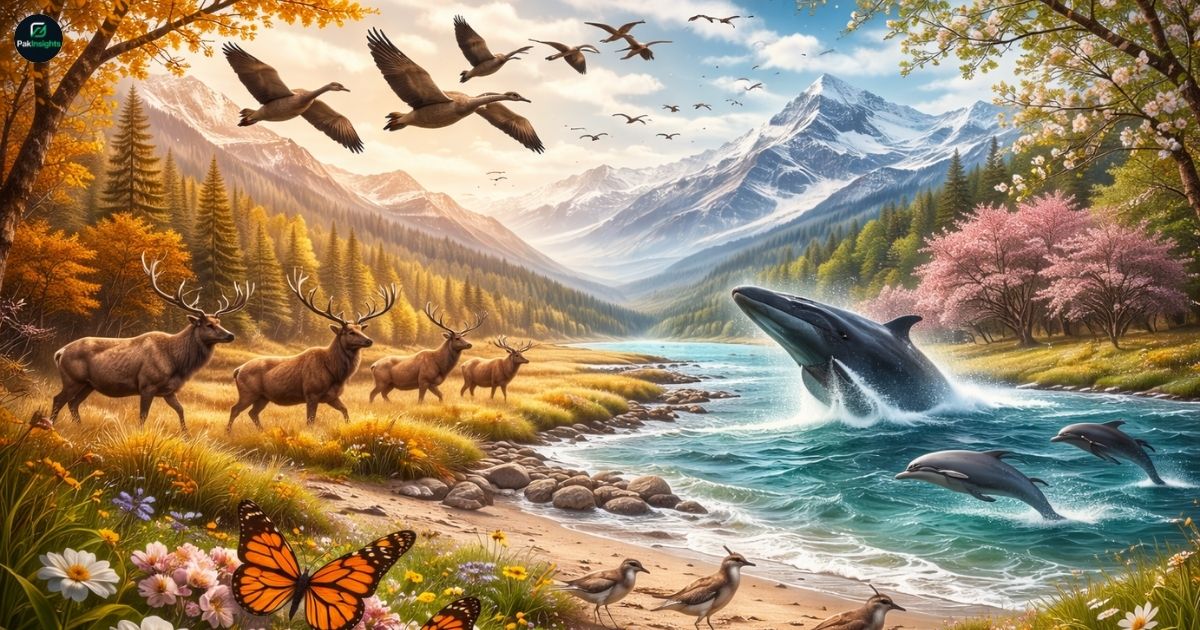
Every year, millions of migratory animals travel vast distances. These journeys are driven by seasonal movement, food availability, and the need for safe breeding grounds. In the United States, from the North American Arctic to Georgia, South Carolina, and Florida, animals follow their instincts to survive. Terrestrial mammals, marine mammals, and flying mammals all take part in these incredible journeys, showcasing navigation and orientation, homing ability, and even celestial navigation. Migration is more than travel—it is a complex behavior shaped by natural selection, climate adaptation, and the rhythm of photoperiodism.
For many species, migration is a yearly ritual. Long-distance migration can cover thousands of kilometres/miles, while short-distance migration often follows local wet and dry seasons. These movements ensure animals reach areas with optimal food availability, suitable habitat changes, and safe conditions for raising their young. Migration is tightly linked to the internal clock / circadian rhythm and is influenced by endocrine glands/hormones, which regulate metabolic changes and fat accumulation/metabolism.
How Seasonal Changes Trigger Animal Migration
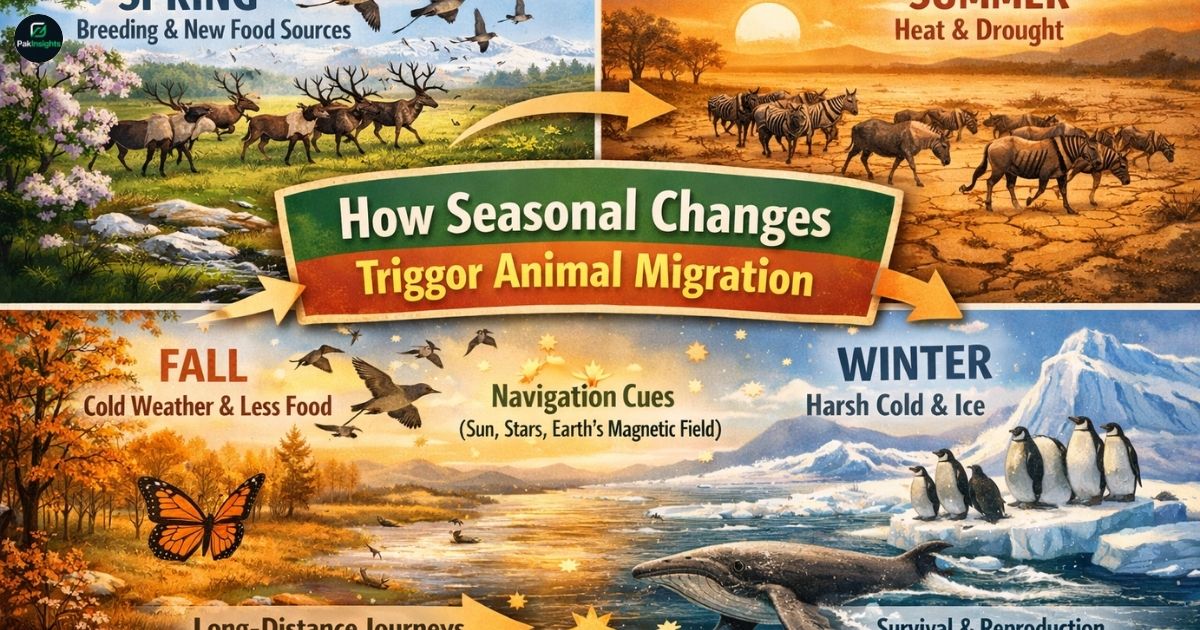
Seasonal changes are the main cue for migration. As day length shifts in spring and autumn, animals respond to photoperiodism. For example, Caribou (Rangifer tarandus) in the North American Arctic move from the barrens to the taiga / northern forests, tracking food availability and safety. American bison (Bison bison) once followed the Great Plains, traveling hundreds of kilometres/miles to reach fresh grass during seasonal rains. These movements are examples of herd migration and show how terrestrial mammals respond to environmental triggers.
Even flying mammals like Pipistrelle bats (Pipistrellus pipistrellus) and Red bats (Lasiurus borealis) time their departures using internal clocks, endocrine control, and star navigation. In marine environments, Antarctic whales and Fin whales (Balaenoptera physalus) migrate according to seasonal timing, seeking warmer waters during winter. Seasonal changes influence not only movement but also metabolic changes, gonadal development, and molting, allowing animals to survive predation and starvation during harsh periods.
Major Migratory Routes and Patterns Around the World
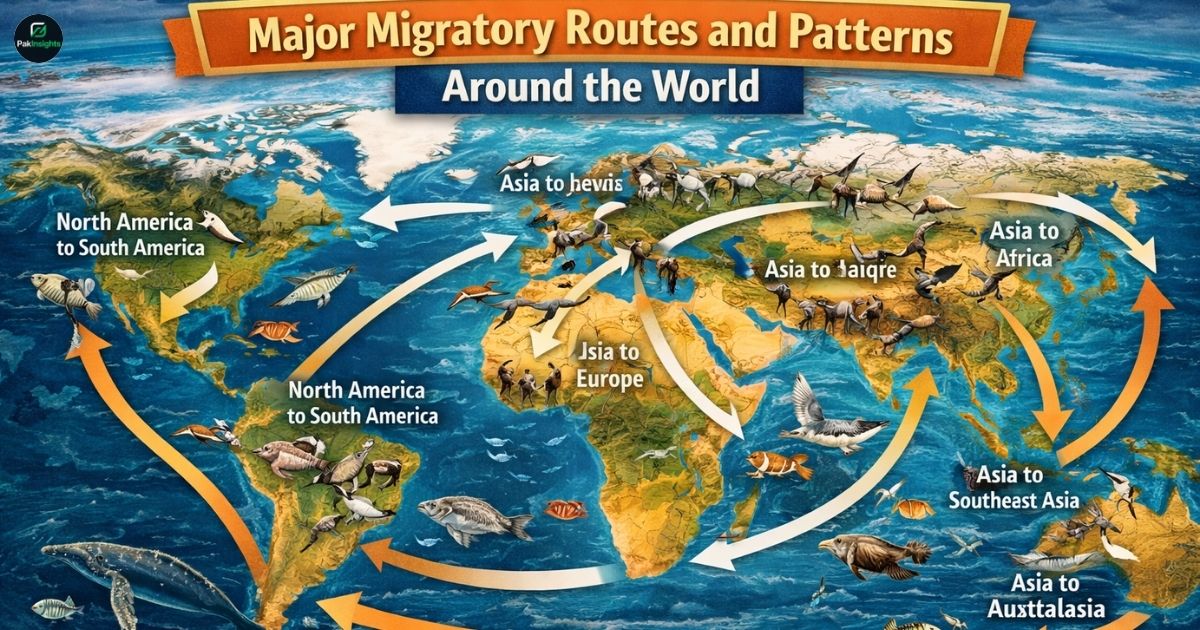
Migratory animals follow incredible migration routes. In Africa, Wildebeest (Connochaetes taurinus) and Zebra move across the Serengeti, Tanzania, covering over 1,600 kilometres/miles travelled. Elephants (Loxodonta africana) wander in search of water during wet and dry seasons, while Springbok (Antidorcas marsupialis) in Namibia and Botswana migrate in huge herds, facing risks of predation and starvation.
In North America, Elk (Cervus canadensis), Mule deer (Odocoileus hemionus), and Dall sheep (Ovis dalli) migrate to safer wintering areas. Birds like the yellow wagtail (Motacilla flava) and gray-cheeked thrush (Hylocichla minima) follow flyways from the Arctic to the southern USA. Marine mammals such as Humpback whales (Megaptera novaeangliae), Northern blue whales (Balaenoptera musculus), and Harp seals (Pagophilus groenlandicus) travel thousands of kilometres/miles between breeding grounds and wintering areas, often returning to the same spots annually.
Table: Examples of Major Migration Routes
| Animal | Route | Distance (km) | Notes |
|---|---|---|---|
| Caribou (Rangifer tarandus) | Barrens → Taiga | 200–400 | Herds follow food and safety |
| American bison (Bison bison) | Great Plains | 320–640 | Circular migration |
| Wildebeest (Connochaetes taurinus) | Serengeti | 1,600 | Driven by rainfall |
| Humpback whale (Megaptera novaeangliae) | Antarctica → Tropics | 3,000+ | Breeding in warm waters |
| Red bat (Lasiurus borealis) | Northern USA → Florida | 1,600 | Nocturnal migration |
Adaptations That Help Animals Survive Seasonal Changes
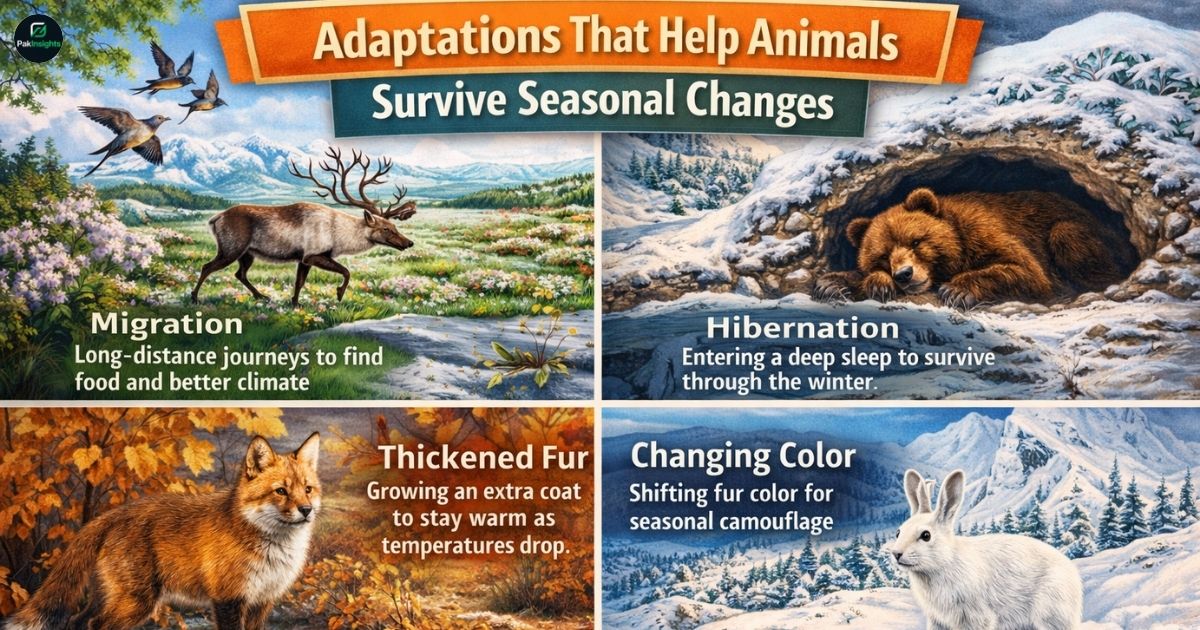
Animals develop amazing adaptations to survive migration. Many terrestrial mammals accumulate fat before long-distance migration. Flying mammals like Hoary bats (Lasiurus cinereus) and Silver-haired bats (Lasionycteris noctivagans) rely on fat accumulation/metabolism to fuel night flights. Marine mammals such as Antarctic whales develop thick layers of blubber to endure cold oceans.
Behavioral adaptations are equally important. Herd migration ensures protection, while navigation and orientation skills help animals reach breeding grounds. Birds and bats use compass sense, celestial bearings, and even star navigation. Experiments show that species like Mouse-eared bats (Myotis myotis) return to the same caves each year, demonstrating incredible homing ability. Seasonal molting, gonadal development, and endocrine control further prepare animals for survival during wet and dry seasons and periods of scarce resources.
Impact of Climate Change on Animal Migration
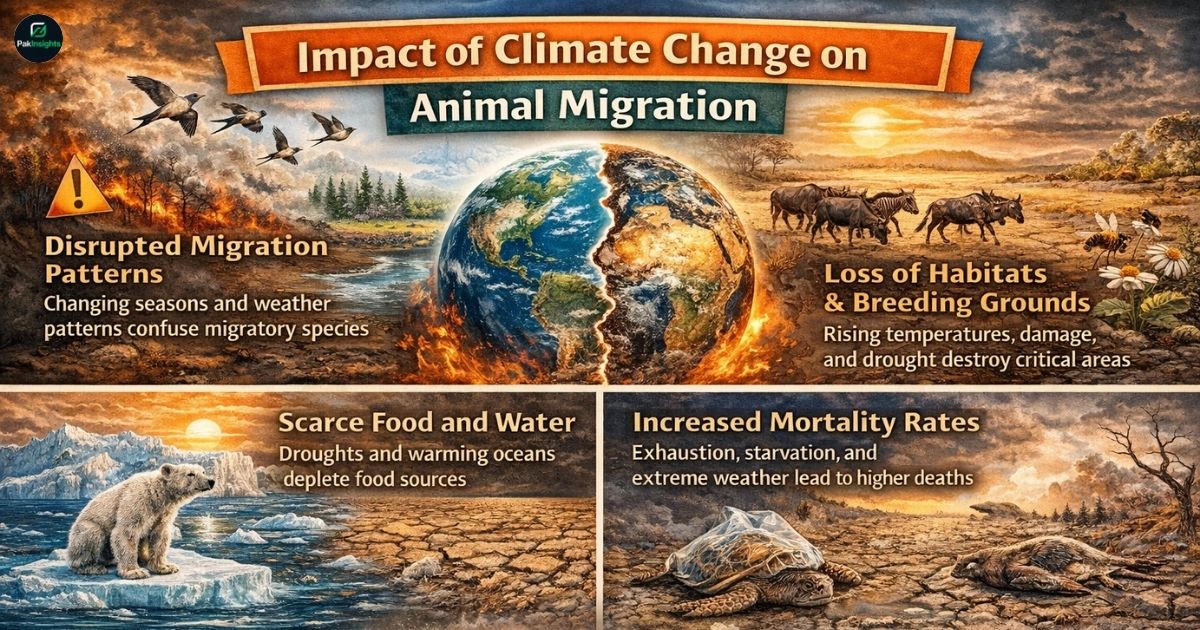
Climate change is reshaping migration patterns worldwide. Rising temperatures and habitat loss affect food availability, breeding grounds, and wintering areas. In the US, birds like the yellow wagtail (Motacilla flava) may shift routes northward, while marine mammals like Northern blue whales (Balaenoptera musculus) adjust migration periods due to changing ocean currents.
Environmental shifts also disrupt natural selection. Animals may face starvation if they arrive too early or too late at feeding sites. Changes in productivity fluctuations at trophic levels impact ecosystems, making migration more dangerous. Conservationists now track migration routes using GPS and satellite technology to protect species and preserve corridors. Maintaining ecological significance ensures animals continue these age-old journeys, which balance nature and sustain life across continents.
Conclusion:
Migratory animals are remarkable travelers shaped by evolution, climate, and instincts. From terrestrial mammals like Caribou (Rangifer tarandus) to marine mammals such as Humpback whales (Megaptera novaeangliae), and flying mammals like Red bats (Lasiurus borealis), their journeys reveal incredible adaptations. Understanding these seasonal movements, navigation skills, and environmental needs highlights the importance of conservation and the delicate balance of our ecosystems.
Frequently Asked Questions
Q1: What are migratory animals?
Migratory animals are species that travel seasonally to find food, breeding grounds, or better habitats.
Q2: Why do animals migrate?
They migrate to survive changing seasons, food scarcity, or harsh environmental conditions.
Q3: What is the difference between long-distance and short-distance migration?
Long-distance migration covers thousands of kilometres, while short-distance migration usually stays within a local region.
Q4: How do animals navigate during migration?
Many use internal clocks, celestial navigation, magnetic fields, and familiar landmarks to find their way.
Q5: How does climate change affect migratory animals?
Shifting temperatures, habitat changes, and food availability can alter migration timing and routes.