Climate change is no longer a general idea. You can see it unfolding around you. Across the United States and the world, the impact of climate change on animals is becoming harder to ignore. From forests to oceans, climate change and wildlife are now tightly linked in ways that shape the future of life on Earth. This article explains how Climate Change Is Reshaping Wildlife & Natural Ecosystems in clear, human language, using science-backed facts and real-world examples.
Scientists agree that the impact of global warming on wildlife is accelerating. As the planet warms, the climate crisis and biodiversity deepen together. Animals that once thrived now struggle. Many animals affected by climate change face shrinking habitats, new dangers, and uncertain survival. Understanding these changes helps you see why action matters now.
Major Ways Climate Change Is Disrupting Wildlife Survival
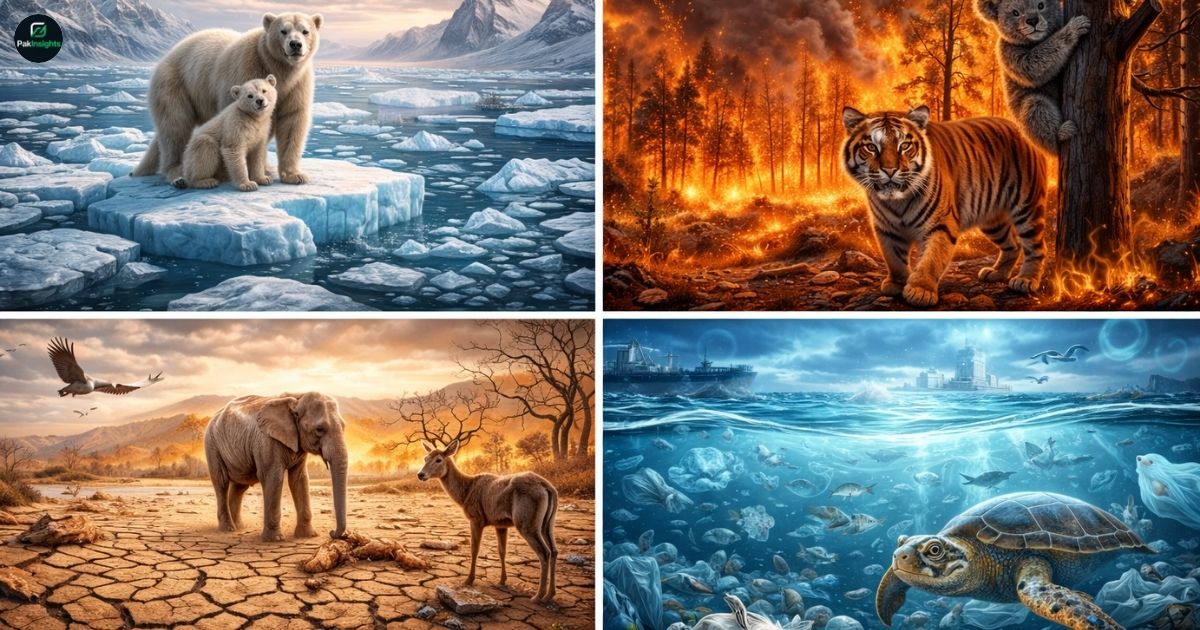
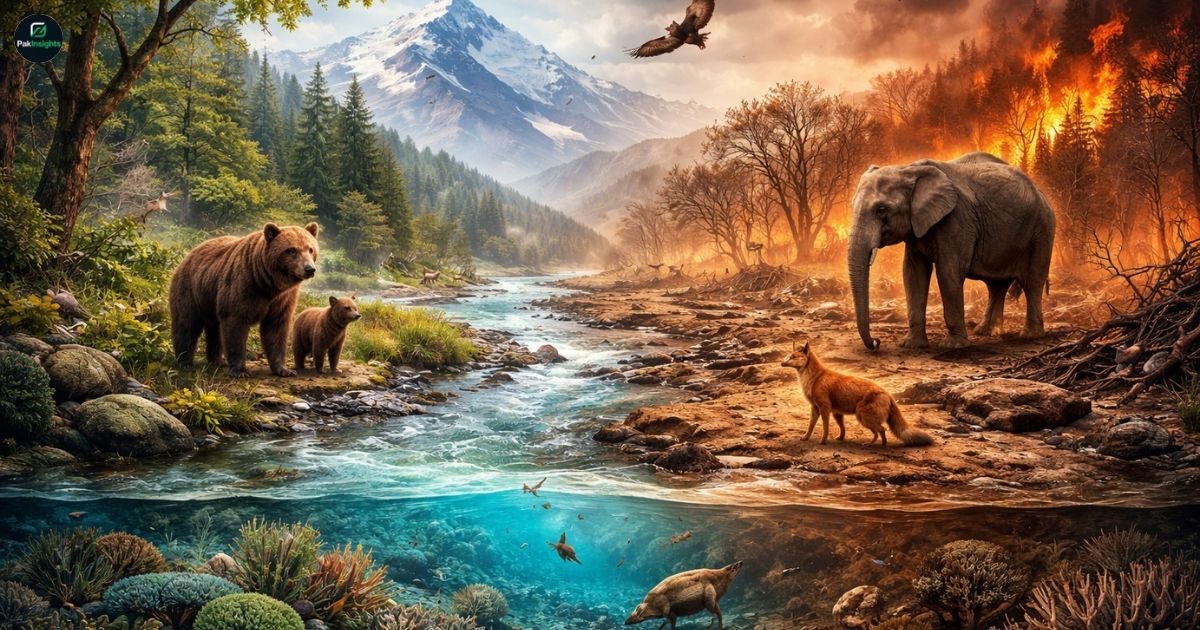
Right now, Climate Change begins with heat. Rising global temperatures trigger long-term climate shifts that disrupt fragile ecosystems. As heat increases, wildlife habitat loss, habitat fragmentation, and food and water scarcity follow. These pressures cause ecosystem imbalance, leading to wildlife population decline and growing animal extinction risk. In the U.S., droughts dry wetlands, while forests burn more often.
Then come disasters. Extreme weather events such as droughts, wildfires, hurricanes, and other climate-related natural disasters destroy homes for animals in hours. The climate change effects on ecosystems appear suddenly and violently. Australian bushfires showed how fast damage can spread, killing koalas and kangaroos by the millions. Similar patterns now threaten terrestrial ecosystems and marine ecosystems worldwide, increasing environmental degradation and climate-driven threats to species survival.
Species Most at Risk from Climate Change
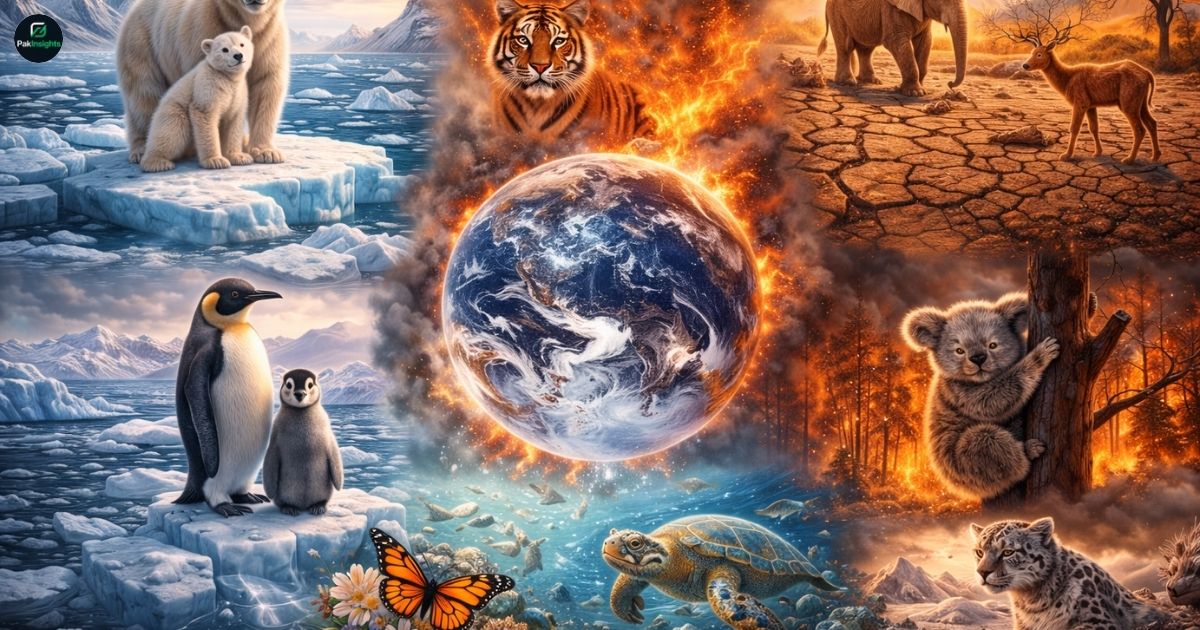
Some species feel the impact first. It becomes clear when you look at iconic animals. African elephants in Hwange National Park face shrinking water sources and rising heat. Jaguars wander closer to farms, increasing human-wildlife conflict and retaliatory killings. Pangolins suffer from poaching and illegal hunting, made worse by habitat stress. Each loss accelerates biodiversity loss.
In the oceans, danger grows quietly. Warming oceans drive ocean warming impacts that affect warming oceans and marine life. The North Atlantic right whale faces vessel strikes and fishing gear entanglement as food shifts north. Humpback whale populations depend on healthy phytoplankton, which decline as seas warm. These changes threaten endangered species and push ecosystems closer to ecosystem collapse.
| Species | Climate Threat | Result |
|---|---|---|
| North Atlantic right whale | Warming oceans, vessel strikes | Population decline |
| African elephants | Food and water scarcity | Habitat loss |
| Jaguars | Habitat fragmentation | Conflict with humans |
How Humans Can Help Protect Wildlife from Climate Change
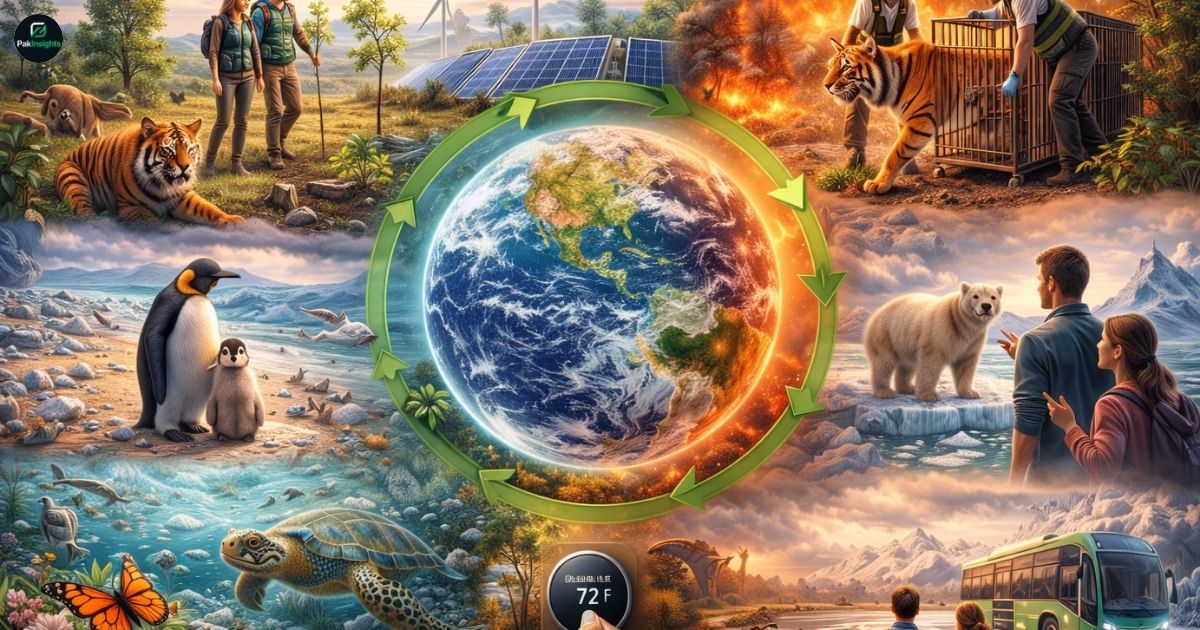
There is hope. Healthy nature can absorb carbon and store atmospheric carbon through carbon absorption and carbon sequestration. Forests, wetlands, and oceans remove atmospheric CO2 naturally. These nature-based climate solutions deliver powerful ecosystem services that buffer against flooding, reduce disaster impact, and maintain ecological balance.
Protecting animals protects people, too. Wildlife conservation, habitat restoration, and preserving ecosystems strengthen keystone species that regulate ecosystems and support food webs. Whales fertilize seas. Elephants shape forests. When you support protecting biodiversity, carbon reduction strategies, climate change mitigation, and broader environmental protection efforts, you help wildlife adapt and survive. In doing so, you help secure a safer future for yourself and the planet.
“Healthy ecosystems are our strongest ally against climate change.” — United Nations Environment Programme
Climate change is reshaping life faster than many expected. Yet informed action still matters. By understanding How Climate Change Is Reshaping Wildlife & Natural Ecosystems, you become part of the solution that keeps nature and humanity standing strong.
Frequently Asked Questions
How does climate change affect wildlife the most?
Climate change alters habitats, food sources, and migration routes, increasing stress, disease, and extinction risks for many species.
Which animals are most affected by climate change?
Polar species, marine animals, and endangered wildlife with limited adaptability face the greatest threats from warming temperatures.
Why are ecosystems important in fighting climate change?
Healthy ecosystems absorb carbon, regulate climate, and support biodiversity, making them natural defenses against global warming.
How do warming oceans impact marine life?
Warming oceans disrupt food chains, harm coral reefs, and increase risks like vessel strikes and fishing gear entanglement.
What can humans do to protect wildlife from climate change?
Reducing emissions, supporting conservation, restoring habitats, and protecting biodiversity all help wildlife survive climate change.