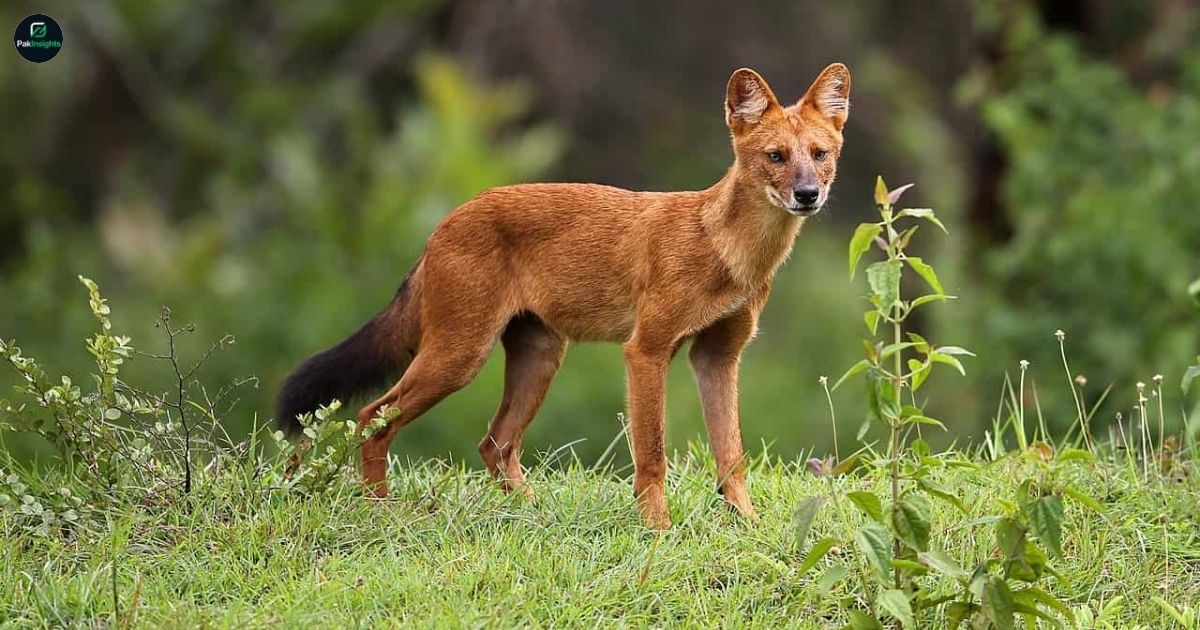
The dhole, also called the Asiatic wild dog, Indian wild dog, or Cuon alpinus, is one of the most fascinating wild canines in the world. Known for its reddish coat and striking single-cusped molars, this social carnivore thrives in Asia’s forests and grasslands. Often nicknamed the whistling dog because of its unique vocal calls, the dhole is an efficient pack hunter, capable of bringing down prey many times its size. Despite its skills, the species faces severe threats and is listed as an endangered species on the IUCN Red List, making conservation efforts critical.
Dholes play a key role as apex predators in forest ecosystems. Their hunting behavior keeps herbivore populations like ungulates in balance, which maintains the overall health of the ecosystem. The loss of dholes can trigger biodiversity loss and disrupt the delicate ecosystem balance. As human expansion leads to habitat fragmentation, livestock predation, and human–wildlife conflict, the survival of the dhole becomes increasingly uncertain. Understanding their biology, behavior, and threats is essential for effective wildlife conservation.
What Is a Dhole? Species Overview and Physical Characteristics
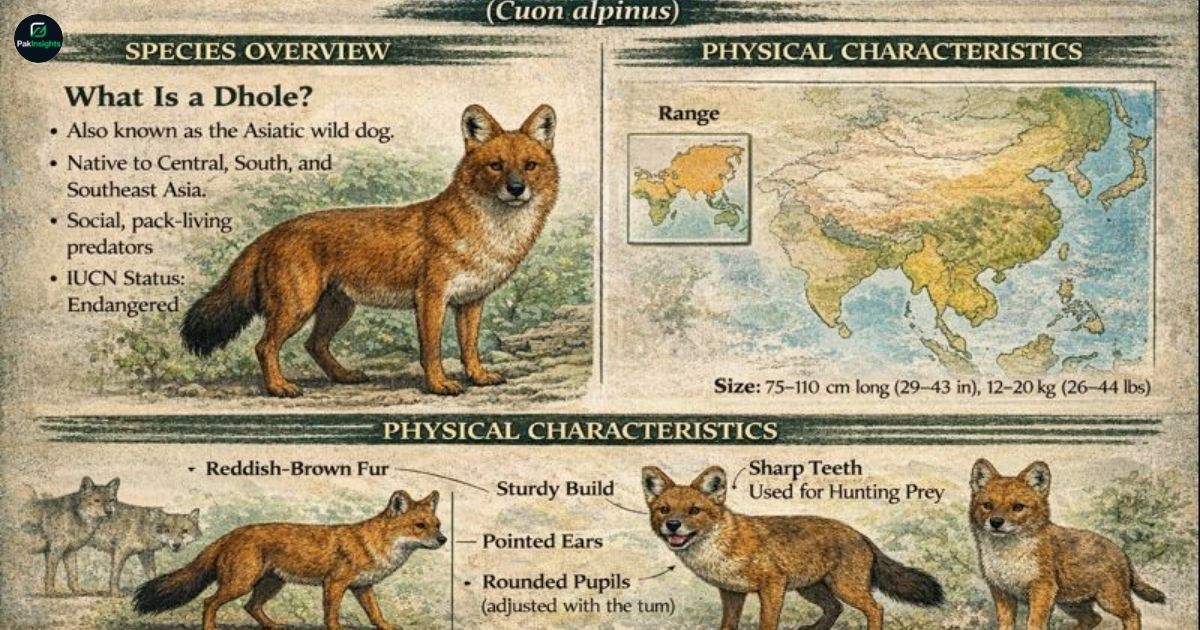
The dhole, scientifically known as Cuon alpinus, belongs to the Family Canidae, Order Carnivora, and Genus Cuon. It is a medium-sized wild dog species, often called the red dog or mountain wolf in different regions. Adult dholes weigh between 15 and 20 kilograms and measure 80 and 110 centimeters in body length. Their skull morphology is unique among wild canines, featuring a pronounced sagittal crest and single-cusped molars, which give them a powerful bite for tearing flesh. Their reddish-orange coat blends perfectly with forest shadows, making them elusive hunters.
The dhole is often compared with the gray wolf and African wild dog, but it has shorter legs, a bushy tail, and a more compact frame. Their dentition and jaw structure allow them to efficiently process prey without crushing bones, a trait uncommon in many pack-living canids. Known as a whistling dog, they communicate through high-pitched whistling calls to coordinate hunts and alert the pack to danger. This vocal communication sets them apart from most wild dog species, highlighting their complex behavior & ecology.
Dhole Habitat, Diet, and Social Behavior in the Wild
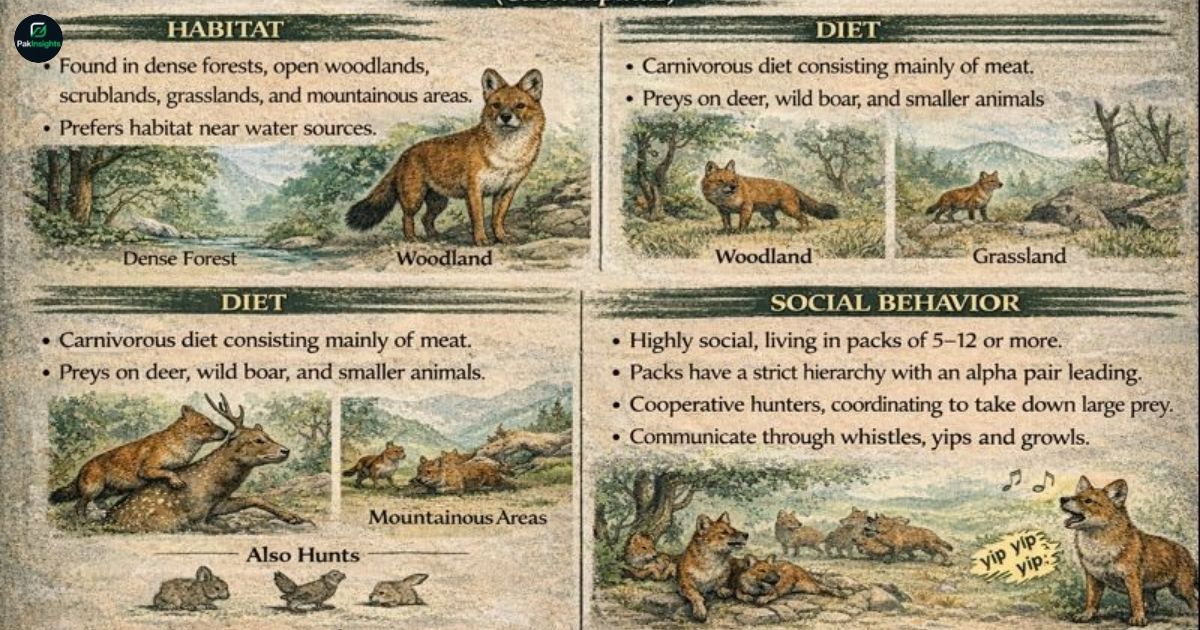
Dholes inhabit South Asia, Southeast Asia, and East Asia regions, including the Indian subcontinent, the Himalayan region, the Western Ghats, and the Eastern Ghats. They prefer tropical forests, alpine forests, and open grasslands near protected national parks and wildlife reserves. These environments provide abundant prey species, such as deer, wild boar, and smaller mammals, which are essential for their survival. Distribution & habitat are becoming fragmented, which threatens their ability to form stable packs.
The dhole is a highly social pack-living canid, often hunting in groups of 6–20 members. Their cooperative hunting strategy includes prehunt social rituals, flanking prey, and regurgitation feeding for pups. Dholes use communal dens for raising their young and display a strong clan-based social structure. Packs communicate through vocal communication, scent markings, and body language. This teamwork allows them to outcompete larger predators like Bengal tigers and leopards, showing the dhole’s vital role in maintaining ecosystem balance.
| Aspect | Details |
|---|---|
| Scientific Name | Cuon alpinus |
| Common Names | Dhole, Asiatic wild dog, Indian wild dog, Red dog, Whistling dog |
| Size | 80–110 cm body length, 15–20 kg |
| Habitat | Tropical forests, alpine forests, grasslands |
| Diet | Deer, wild boar, small mammals (ungulates) |
| Social Structure | Pack-living, clan-based, cooperative hunting |
| IUCN Status | Endangered species |
Threats to Dholes and Global Conservation Efforts
The dhole faces multiple threats. Habitat fragmentation from human development reduces their hunting grounds. Diseases like rabies and canine distemper often spread from domestic dogs to wild populations. Poaching, snaring, and livestock predation conflicts further endanger this Asian wild dog. Small, isolated populations experience inbreeding and the Allee effect, decreasing genetic diversity and increasing extinction risk.
Global wildlife conservation efforts aim to save the dhole. Programs include the Wildlife Protection Act 1972, conservation breeding programs, and the establishment of protected areas. Organizations monitor fragmented populations, reintroduce individuals to secure habitats, and reduce human–wildlife conflict. The survival of the dhole also depends on preserving prey populations and maintaining forest ecosystems. As one wildlife expert states, “Protecting dholes means protecting Asia’s forests and the species that rely on them.” For the Asian carnivore, each saved pack ensures the balance of the ecosystems they dominate.
FAQs:
What is a dhole animal? A dhole is a medium-sized wild dog species native to Asia, also called the Asiatic wild dog or Cuon alpinus.
Where do dholes live? They inhabit South Asia, Southeast Asia, and East Asia, often in tropical forests, alpine forests, and grasslands.
Why are dholes endangered? Main threats include habitat loss, disease transmission, human–wildlife conflict, and poaching.
Dhole vs wolf differences? Dholes are smaller, reddish, hunt in packs differently, and have unique single-cusped molars compared to gray wolves.
Dhole conservation status? Listed as an endangered species on the IUCN Red List, with ongoing wildlife conservation efforts globally.