
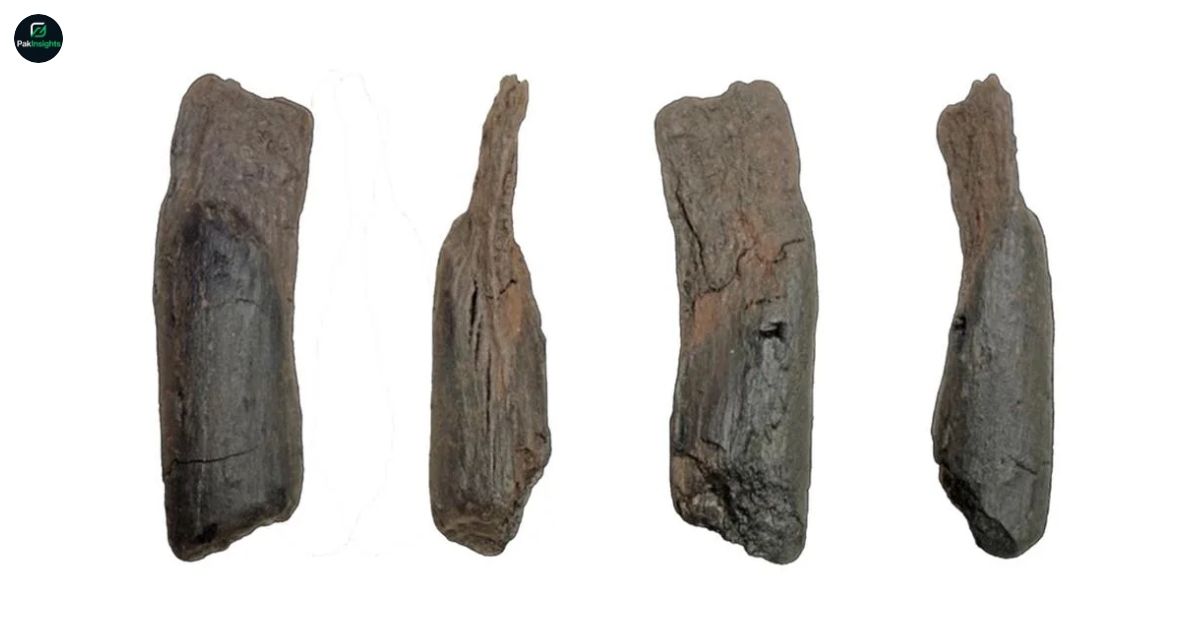
430,000-Year-Old Wooden Tools Discovered in Greece have stunned archaeologists and historians worldwide. These rare wooden artifacts were found on a lake shore in Greece and are considered the oldest wooden tools discovered. The find provides new insights into early human technology and survival strategies. Experts say the tools highlight the ingenuity of our human ancestors thousands of years ago.
Researchers uncovered two main items. One is a thin stick 2.5 feet long, believed to be used for digging in mud. The other is a handheld chunk of wood, possibly made from willow or poplar, likely used for shaping stone tools. Discovering such tools is unusual because wood usually rots quickly. The mud in the Megalopolis basin buried the items quickly and preserved them for nearly half a million years.
The site is about 430,000 years old. While no human remains were found, nearby discoveries include stone tools and elephant bones. This suggests the tools could belong to Neanderthals or other early human species. Ancient wooden artifacts have appeared in Germany and China, but researchers consider these the oldest wooden tools ever unearthed.
Experts like study authors Annemieke Milks and Katerina Harvati emphasize that the tools offer a rare look at early human life. Archaeologist Jarod Hutson called it a “rare archaeological find” that shows early humans’ sophisticated use of natural resources.
These prehistoric tools enhance our understanding of early human technology and survival methods. They also highlight the importance of artifact preservation in studying ancient life. Such discoveries connect us with the ingenuity and resilience of our human ancestors.
Meta Description
430,000-Year-Old Wooden Tools Discovered in Greece reveal early human technology and offer insights into Neanderthals and prehistoric life.