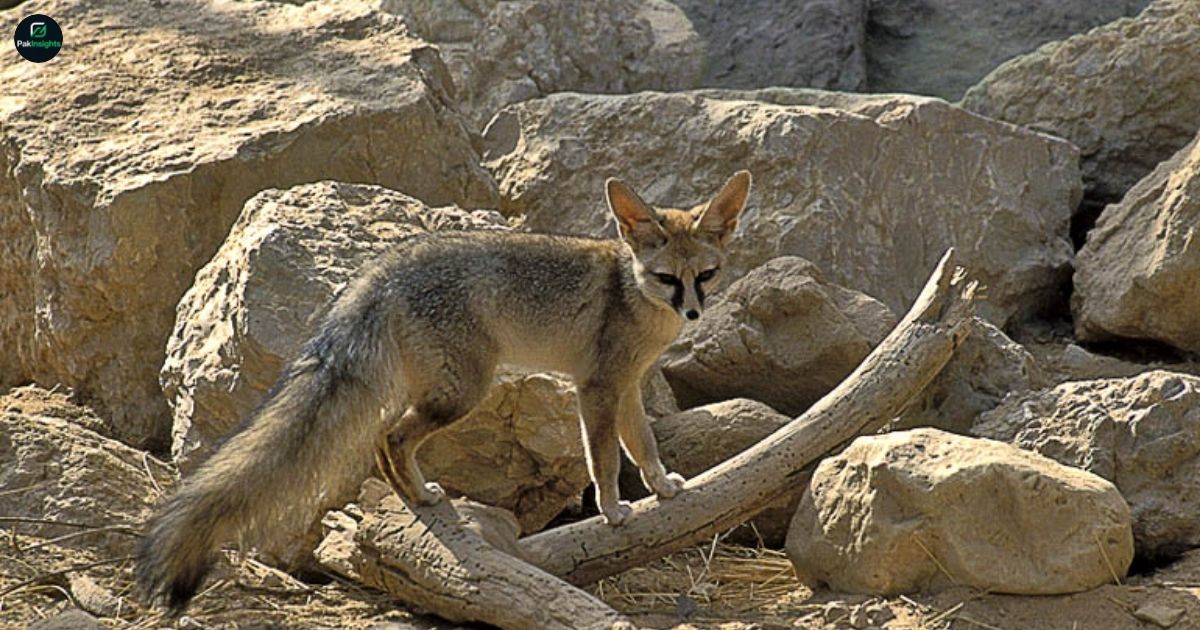
The Blanford’s fox (Vulpes cana) is one of the most fascinating small fox species found in the deserts and mountains of West Asia and Central Asia. Also called the Afghan fox, royal fox, hoary fox, steppe fox, black fox, or king fox, this elusive creature has captured the attention of wildlife enthusiasts around the world. Known for its bushy tail and wide ears, the desert fox thrives in harsh landscapes where few animals survive. Despite being listed as Least Concern (IUCN), its survival depends on habitat protection and careful monitoring of human impacts.
Found across the Arabian Peninsula, Iran Plateau, Oman, UAE, Pakistan, Israel, Yemen, Afghanistan, and Tajikistan, the Blanford’s fox demonstrates remarkable adaptability. Its nocturnal activity pattern and skills like rock climbing and ledge jumping help it hunt and escape predators. Studying this fox offers a window into how desert animals evolve unique traits to cope with extreme conditions and limited food resources.
Unique Features and Physical Characteristics
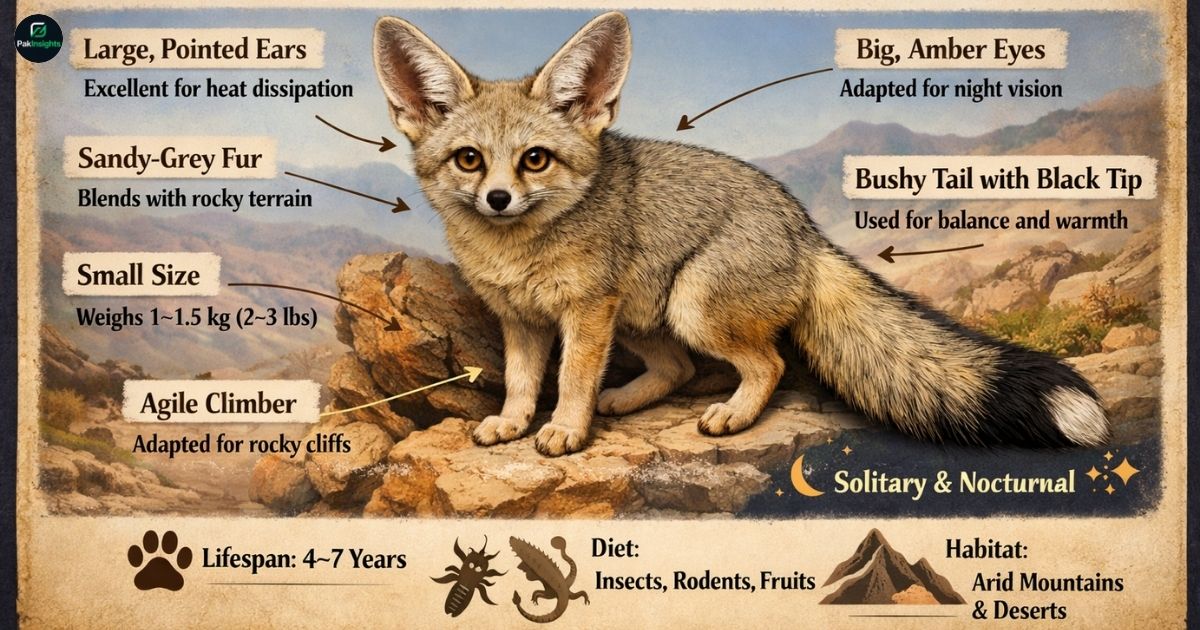
The Blanford’s fox is a small fox species with striking physical traits that set it apart from other desert dwellers. Its bushy tail, nearly as long as its body, acts as a counterbalance during rock climbing and agile movements. The wide ears are not only adorable but also crucial for adaptation to heat, allowing the fox to dissipate warmth efficiently in scorching deserts. Its coat changes with seasons, providing thermal insulation; the winter coat is thick and woolly, while the summer coat is paler and lighter. This desert fox also sports a distinctive mid-dorsal black band running along its spine, with the tip of the tail often black.
The fox’s sharp semi-retractile claws help it cling to rocks and jump up to three meters. Among all extant canids, only the fennec fox is smaller, making Blanford’s fox one of the tiniest yet most agile predators. Its omnivorous, frugivorous, and insectivorous diet requires both stealth and skill, and it relies on unique adaptations like cat-like claws and keen senses to navigate the challenging arid habitat.
| Feature | Description |
|---|---|
| Length | 38.5–80 cm head-body, 33–41 cm tail |
| Weight | 873 g average |
| Ears | Large, wide for heat dissipation |
| Tail | Bushy aids in climbing and balance |
| Claws | Sharp, semi-retractile, ideal for rocks |
Habitat, Diet, and Behavioral Patterns
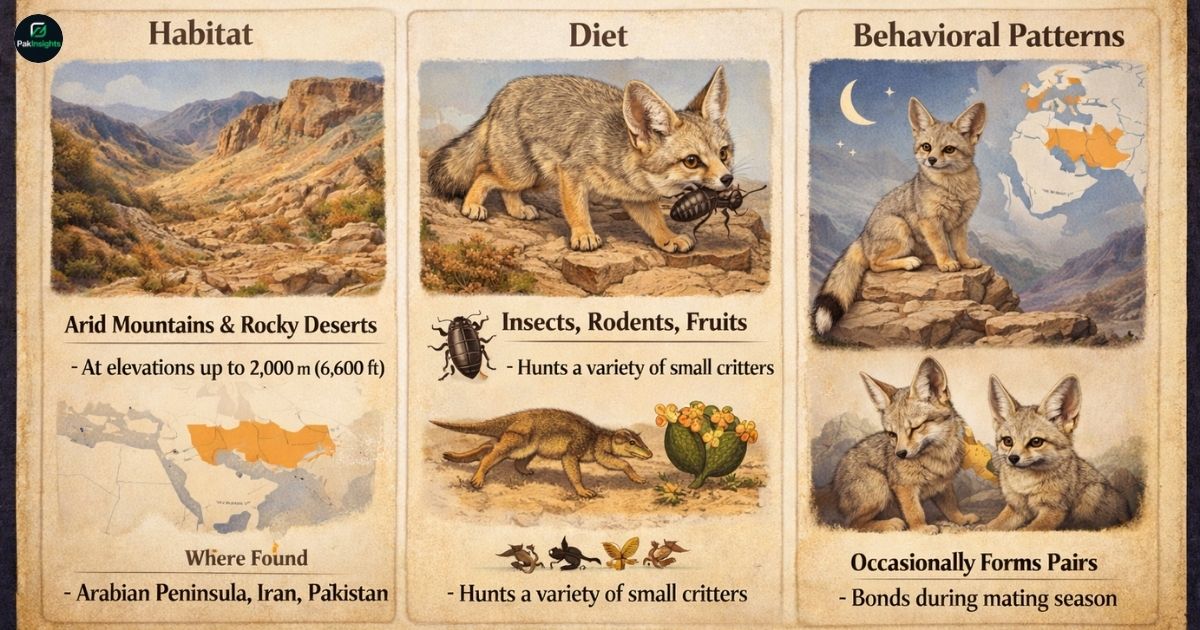
The Blanford’s fox is a true desert survivor. It inhabits arid habitats across the Sinai Peninsula, Arabian Peninsula, Iran Plateau, Oman, UAE, Pakistan, Israel, Yemen, Afghanistan, and Tajikistan. This West Asian fox prefers rocky cliffs, steep mountains, and dry valleys where it can hide from predators and find food. Sightings are often rare, making field research challenging, but camera traps in Wadi Sharis, Yemen, have confirmed its presence. The species’ geographic range shows remarkable flexibility, with reports from elevations around 1,200 meters.
Its nocturnal predator behavior is critical for survival. The Blanford’s fox feeds mostly on fruits and insects, including Capparis cartilaginea, Capparis spinosa, Russian olives, melons, and grapes. Unlike other foxes, it rarely caches food and usually forages alone, although pairs are occasionally seen. Its predator avoidance skills include moving silently across ledges, using its tail for balance, and remaining active during the night. Juveniles learn climbing and foraging from parents, achieving sexual maturity around 10–12 months.
Conservation Status and Human Impact
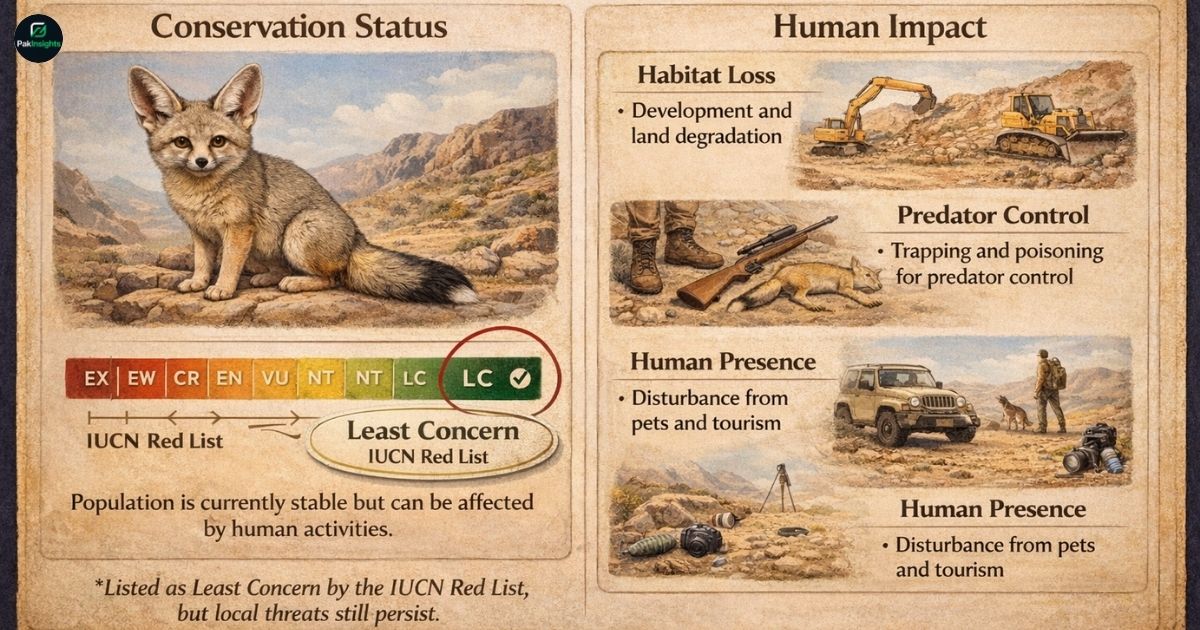
Despite being classified as Least Concern (IUCN), the Blanford’s fox faces several threats. Its conservation status is influenced by fur hunting, poisoning risks, and diseases spread by domestic dogs. In Israel, it is a protected species, while in Oman and Yemen, hunting is restricted. However, human encroachment and habitat destruction still pose challenges to its survival. Studies on population trends reveal that while it remains widespread, local populations may fluctuate due to human activity.
Conservationists emphasize awareness and habitat preservation. Programs encouraging habitat protection and limiting human interference are critical. The fox lives 4–5 years, up to 10 in the wild, and breeds slowly, slowing population recovery. By educating the public and supporting regional wildlife initiatives, we can ensure this Central Asian fox continues to thrive in its desert environment. As one expert notes, “Understanding the Blanford’s fox is key to preserving the fragile ecosystems of arid landscapes.”
Frequently Asked Questions
Q1: What is a Blanford’s fox?
A: The Blanford’s fox (Vulpes cana) is a small desert fox native to West and Central Asia, known for its bushy tail and large ears.
Q2: Where does the Blanford’s fox live?
A: It lives in arid habitats like rocky cliffs, mountains, and deserts across the Arabian Peninsula, Iran Plateau, Oman, UAE, Pakistan, Israel, Yemen, Afghanistan, and Tajikistan.
Q3: What does a Blanford’s fox eat?
A: It has an omnivorous diet, feeding on fruits, insects, and plants like Capparis cartilaginea, Capparis spinosa, Russian olives, melons, and grapes.
Q4: Is the Blanford’s fox endangered?
A: No, it is listed as Least Concern (IUCN), but it faces threats from human activity, habitat loss, and fur hunting.
Q5: How long does a Blanford’s fox live?
A: Its lifespan is 4–5 years, and it can reach up to 10 years in the wild.
Meta Description
Discover the Blanford’s Fox, a small desert fox with unique traits, habitat insights, behavior, and conservation facts.